

SEO website mistakes: Stop killing your rankings today

Website Mistakes That Kill Your SEO and Sales In the modern digital economy, a website serves as the central nervous system of a business’s online operations. It is the primary vehicle for brand messaging, the central hub for lead generation, and the core engine for digital revenue. However, beneath visually stunning interfaces and compelling copywriting, many digital platforms harbor structural flaws that actively undermine their potential. These structural and strategic flaws are commonly referred to as SEO website mistakes. When a digital asset is built without a rigorous adherence to search engine optimization protocols, it becomes practically invisible to the algorithms that dictate market visibility. The consequences of these SEO website mistakes are severe: plummeting organic traffic, rapidly degrading brand authority, and ultimately, a significant loss in potential revenue. Recognizing, diagnosing, and rectifying these fundamental website mistakes is the first and most critical step toward establishing sustainable digital dominance. This comprehensive guide dissects the most damaging SEO website mistakes that organizations frequently make. We will explore the highly technical infrastructural errors that confuse search engine crawlers, the user interface blunders that alienate potential customers, and the strategic misalignments that cause digital campaigns to fail. By understanding the mechanics behind these SEO website mistakes, business leaders and marketing professionals can take decisive action to fortify their digital presence, align their platforms with modern algorithmic requirements, and safeguard their digital revenue streams. The Invisible Barrier: Understanding Technical SEO Errors Search engines do not “see” a website in the same way a human user does. While a human evaluates a website based on its aesthetic appeal and intuitive design, a search engine crawler evaluates it based on raw code, site architecture, and data accessibility. When the underlying code is flawed, the resulting Technical SEO errors act as an invisible barrier, preventing search engines from properly understanding, indexing, and ranking the content. Crawlability and Indexation Failures The most profound SEO website mistakes occur when search engine bots are literally blocked from accessing a site’s most valuable pages. This happens due to several common Technical SEO errors: Misconfigured Robots.txt Files: A single incorrect line of code in the robots.txt file can inadvertently instruct Googlebot to ignore an entire directory of high-value product pages or critical blog content. Improper Noindex Tags: Developers often use “noindex” tags during the staging and development phase of a website to keep the unfinished site out of search results. One of the most common website mistakes is failing to remove these tags when the site is pushed live, effectively rendering the website invisible. XML Sitemap Neglect: Search engines rely on XML sitemaps to understand the hierarchy and importance of pages within a domain. Submitting outdated sitemaps, or sitemaps that include broken or redirected URLs, wastes the search engine’s “crawl budget” and delays the indexing of new, revenue-generating content. These Technical SEO errors mean that regardless of how much budget is spent on content creation or off-page link building, the fundamental lack of crawlability will suppress organic visibility. Rectifying these foundational SEO website mistakes is paramount. The Mobile-First Reality and Mobile Optimization Issues We operate in a mobile-first digital environment. Search engines like Google now predominantly use the mobile version of a website’s content for indexing and ranking. Therefore, treating the mobile experience as an afterthought is no longer just a design flaw; it is one of the most destructive SEO website mistakes a business can make. The Anatomy of Mobile Friction When a platform suffers from severe Mobile optimization issues, the algorithmic penalties are swift. Search engines aim to serve the best possible results to their users, and a site that is difficult to navigate on a smartphone inherently provides a Poor user experience. Common Mobile optimization issues include: Unresponsive Frameworks: Websites that do not dynamically scale their content to fit the viewport of various devices force users to pinch, zoom, and scroll horizontally. This is universally recognized by algorithms as a negative ranking signal. Intrusive Interstitials: Deploying massive pop-ups that cover the entire mobile screen often asking for email sign-ups or promoting an app download creates immediate friction and is actively penalized by search engine algorithms. Inadequate Touch Targets: If buttons, hyperlinks, and navigation menus are placed too closely together, mobile users will struggle to click the correct element. This leads to frustration, immediate site abandonment, and ultimately, a surge in bounce rates. These Mobile optimization issues act as a direct bottleneck to growth. When traffic bounces back to the search results page due to a Poor user experience, the algorithm takes note, lowering the site’s ranking for that query. This cycle severely impacts visibility and guarantees Low conversion rates. The Silent Conversion Killer: Slow Website Speed In an era of instant gratification, patience is a nonexistent commodity. Users expect a digital platform to render content almost instantaneously. Consequently, Slow website speed has been heavily integrated into search engine algorithms as a primary ranking factor. Core Web Vitals and Performance Metrics Google’s Core Web Vitals specifically measure how users experience the speed, responsiveness, and visual stability of a page. Slow website speed is one of the most quantifiable SEO website mistakes because it directly correlates with lost revenue. The elements contributing to Slow website speed include: Unoptimized Assets: Uploading massive, high-resolution images or uncompressed video files directly to a server forces the user’s browser to download heavy files before rendering the page. JavaScript Bloat: Modern web applications, particularly those not utilizing efficient Server-Side Rendering (SSR), often rely heavily on complex JavaScript. If the execution of this code blocks the main thread, the user is left staring at a blank screen. Lack of Caching and CDNs: Failing to utilize Content Delivery Networks (CDNs) or browser caching means that every time a user visits a page, the server must process the entire request from scratch, drastically increasing load times. The correlation between Slow website speed and Low conversion rates is extensively documented. Every passing second of load time exponentially increases the probability that a potential customer will abandon the transaction and
SEO Lebanon: Dominate Search Results with Top Experts
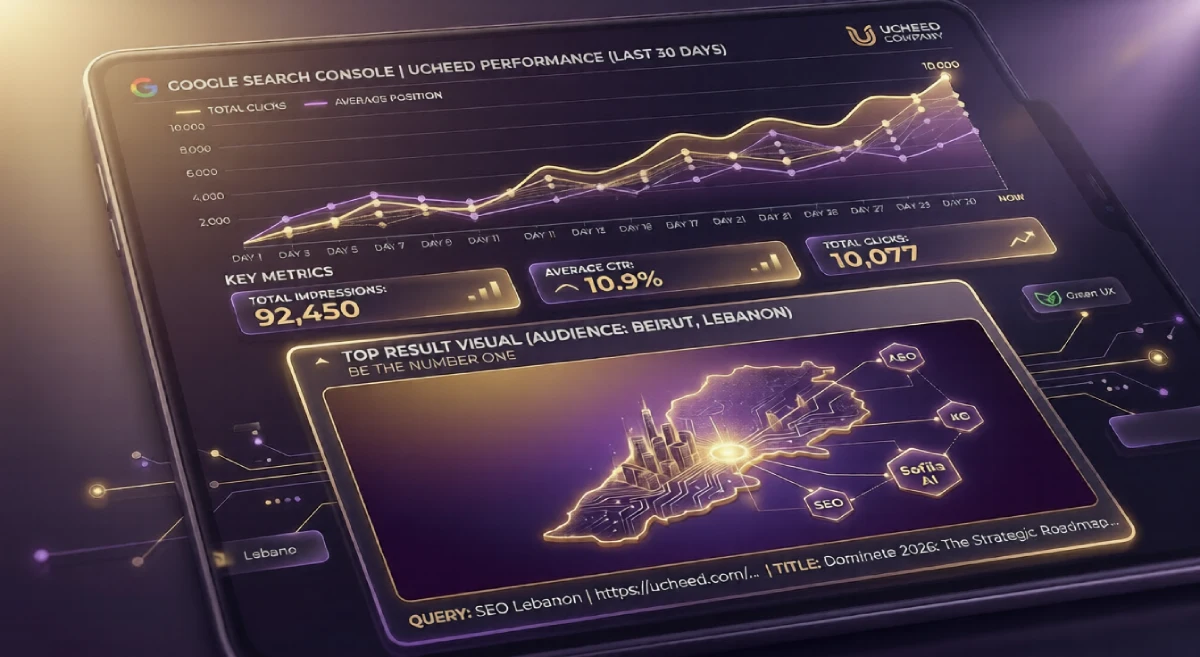
The Complete Guide to SEO in Lebanon 2026 Edition The digital ecosystem is in a state of perpetual, accelerating evolution. Strategies that reliably generated top-tier rankings just a few years ago are now increasingly obsolete, replaced by highly sophisticated, algorithm-driven paradigms. As we navigate through 2026, the intersection of artificial intelligence, changing user behaviors, and complex search algorithms has fundamentally rewritten the rulebook for digital visibility. For businesses operating in the Levant, adapting to this new reality is not merely an option for growth; it is an absolute necessity for survival. Mastering SEO Lebanon requires a profound understanding of both global technological shifts and hyper-local market nuances. This comprehensive guide serves as an architectural blueprint for businesses, marketing professionals, and decision-makers aiming to secure and expand their digital real estate. We will dissect the most critical SEO trends 2026, explore the transformative impact of generative AI on the search landscape, and detail the technical, localized, and content-driven strategies necessary to dominate search Engine Results Pages (SERPs). By moving beyond outdated tactics and embracing a forward-thinking methodology, organizations can leverage SEO Lebanon to drive sustained, high-intent traffic and secure their position as industry leaders. The Paradigm Shift: Understanding SEO Trends 2026 To effectively execute a digital strategy today, one must first recognize how the battlefield has changed. The era of “ten blue links” is definitively over. Search engines are no longer just directories; they are sophisticated answer engines designed to keep users within their ecosystems. Understanding the macro SEO trends 2026 is the foundation upon which any localized strategy must be built. The Rise of the Zero-Click Search One of the most defining SEO trends 2026 is the proliferation of “zero-click searches.” Users increasingly find the answers they need directly on the SERP through featured snippets, knowledge panels, and AI-generated overviews, without ever clicking through to a website. To combat this and still drive organic traffic growth, a modern strategy must: Target complex, multi-layered queries that cannot be answered in a single sentence. Optimize for rich snippets and schema markup to ensure that even if a user doesn’t click, your brand is positioned as the definitive authority providing the answer. Focus on transactional and deep-informational keywords where the user inherently needs to visit a website to complete their journey (e.g., booking a service, purchasing a product, or reading an in-depth whitepaper). Intent Over Keywords Historically, optimizing a page meant repeating a specific phrase a certain number of times. In 2026, algorithms possess an unprecedented understanding of natural language and human psychology. Search engine optimization Lebanon must pivot from “keyword targeting” to “intent matching.” If a user searches for “best banking software,” the search engine knows they are likely looking for a comparative review, not a product page from a single vendor. Aligning content format (guide, listicle, product page, video) with the underlying user intent is a non-negotiable requirement for ranking. The Algorithmic Revolution: AI in SEO The most seismic shift in the digital landscape is the integration of Artificial Intelligence into both the creation of content and the mechanisms of search engines themselves. The role of AI in SEO is dual-faceted: it changes how users search, and it changes how professionals optimize. Search Generative Experience (SGE) and AI Overviews Search engines now utilize Large Language Models (LLMs) to generate conversational, comprehensive answers at the top of the SERP. This redefines the future of search. Users can ask highly specific, nuanced questions and receive synthesized responses drawn from multiple sources. To optimize for this new reality, AI in SEO dictates that content must be profoundly authoritative and semantically rich. Information Gain: Your content must provide unique value, data, or perspectives not found elsewhere. If your page simply aggregates what is already on the internet, AI will bypass it. Conversational Formatting: Structuring content in a Q&A format, using natural language headers, and providing direct, succinct answers followed by deep elaboration helps AI models parse and feature your content. Using AI for Strategy, Not Just Generation While many mistakenly use AI simply to churn out generic blog posts—a tactic actively penalized by modern algorithms—sophisticated practitioners use AI in SEO for data analysis. Predictive analytics, large-scale keyword clustering, and automated technical monitoring are where AI truly shines. Recognizing the future of search means integrating intelligent automation into the backend of your strategy, a philosophy championed by top-tier development agencies. The Trilingual Challenge: Search Engine Optimization Lebanon Executing a global strategy is one thing; executing it in a highly specific cultural and linguistic market is another. Search engine optimization Lebanon is uniquely complex due to the country’s trilingual nature. The Lebanese consumer fluidly transitions between Arabic, English, and French, often within the same search session. Navigating Linguistic Nuance A direct translation of a keyword strategy from English to Arabic will inevitably fail. SEO Lebanon requires independent, culturally aware keyword research for each language. Dialect vs. Modern Standard Arabic (MSA): While formal content may be written in MSA, search queries are frequently typed in local Lebanese dialects or “Arabizi” (Arabic written with Latin characters). Cross-Language Intent: An English search in Lebanon often denotes a B2B query or a search for technology and software, whereas an Arabic search might heavily lean toward local news, FMCG (Fast-Moving Consumer Goods), or hyper-local services. To master search engine optimization Lebanon, websites must employ a flawless multilingual architecture using precise hreflang tags to ensure the correct language version is served to the correct user without diluting domain authority. Dominating the Neighborhood: Local SEO Lebanon For brick-and-mortar businesses, restaurants, medical clinics, and service providers, national rankings are secondary to local dominance. When a user in Hamra searches for a “pharmacy near me,” they expect immediate, geographically relevant results. This is the domain of Local SEO Lebanon. The Power of the Local Pack The “Local Pack”—the map and three business listings that appear at the top of localized searches—is the most valuable real estate for physical businesses. Securing a spot here requires meticulous Local SEO Lebanon tactics: Google Business Profile (GBP) Mastery: Your
E-commerce Website Mastery: 2026 Growth Roadmap

The Future of Your E-commerce Website in 2026: A Strategic Roadmap to Digital Dominance The digital commerce landscape of 2026 has officially transcended the traditional boundaries of retail. We have moved from a world of “clicks” to a world of “meaning,” where an e-commerce website is no longer a mere digital catalog but a sophisticated, living architectural structure. For ambitious brands partnering with Ucheed, the “Digital Growth Architect,” the mission is clear: build, scale, and dominate. As we navigate this era, the distinction between online and offline has blurred into a unified commerce reality. Whether you are a local boutique or a global enterprise, the performance of your e-commerce website in 2026 is determined by its semantic depth, its technical agility, and its ability to serve both human shoppers and autonomous AI agents . In this comprehensive guide, we explore the essential pillars of modern digital retail and how specialized services from custom e-commerce solutions to headless commerce architecture are reshaping the industry. The Architectural Evolution: Custom E-commerce Solutions In 2026, the “template-first” approach is dead. A high-performing e-commerce website requires a foundation built on custom e-commerce solutions that align with a brand’s unique DNA. Static pages have been replaced by “scrollytelling” and interactive bento-grid layouts that maximize screen real estate and emotional engagement. Take the example of Nuraya Cosmetics, a brand that understands the power of a tailored digital presence. By utilizing custom e-commerce solutions, Nuraya Cosmetics ensures that its radiant day creams and night renewal serums are presented in a high-contrast, “dark aesthetic” interface that conveys luxury and sophistication . This level of customization allows Nuraya Cosmetics to stand out in a crowded market, proving that custom e-commerce solutions are the only way to maintain brand authority in a digital-first world . Mobile-First and Beyond: The Mobile Commerce Application The transition to mobile-first indexing is complete. In 2026, over 75% of e-commerce transactions originate from smartphones . However, a mobile-friendly site is no longer enough; the modern consumer demands a dedicated mobile commerce application that offers an “app-like” interface with near-zero latency. Ucheed specializes in developing each mobile commerce application with a focus on the “Thumb Zone” optimizing every interaction for one-handed use. A robust mobile commerce application allows brands to leverage push notifications and biometric authentication, significantly reducing friction. For a brand like Nuraya Cosmetics, a mobile commerce application isn’t just a shopping tool; it’s a direct line to the consumer’s pocket, enabling personalized routines and instant reorders . Mastering the Backend: Inventory and CRM Integration The beauty of a world-class e-commerce website lies in what the user never sees. To scale effectively, your platform must be powered by a real-time inventory management system that synchronizes stock levels across all channels. By 2026, the “indexing crisis” caused by content tsunamis means that search engines prioritize sites that show accurate, live data. A sophisticated inventory management system ensures that you never sell a product that isn’t on the shelf, protecting your brand reputation. When this is paired with customer relationship management for retail, the result is hyper-personalization. Customer relationship management for retail allows you to understand not just what a customer bought, but why they bought it. For instance, Nuraya Cosmetics uses customer relationship management for retail to track the specific fragrance preferences of its users, offering handpicked rewards and individualized offers . Furthermore, integrating customer relationship management for retail with your inventory management system allows for predictive replenishment, where the system anticipates when a customer will run out of their favorite cleanser . The Rise of the Multi-Vendor Marketplace Development The marketplace model has become the primary growth engine for startups in 2026 . Through multi-vendor marketplace development, entrepreneurs can act as “conductors,” facilitating trade between independent sellers without the burden of holding inventory . This model is particularly effective for niche sectors, such as sustainable fashion or specialized beauty tools . When embarking on multi-vendor marketplace development, the focus must be on vendor experience. A successful multi-vendor marketplace development project includes dedicated merchant apps that allow sellers to manage their own pricing and support . Ucheed’s approach to multi-vendor marketplace development emphasizes scalable architecture that can handle the complexity of split payments and diverse shipping rules . Even established brands like Nuraya Cosmetics could benefit from a marketplace approach by hosting curated third-party skincare tools that complement their core product line . B2B E-commerce: The Commercial Operating System The scale of the B2B market in 2026 is staggering, projected to reach $36 trillion globally . A modern B2B e-commerce platform is no longer just a portal; it is the commercial operating system of the business . It handles complex workflows, including tiered pricing, bulk ordering, and account-specific catalogs . Decision-makers now prioritize a B2B e-commerce platform that offers self-service capabilities . Buyers expect to check stock and confirm compatibility without waiting for a sales representative. A high-end B2B e-commerce platform also integrates directly with ERP systems like Odoo, ensuring that quotes turn into orders and orders trigger production in one seamless loop . Whether you are selling industrial components or supplying pharmacies with products from Nuraya Cosmetics, a robust B2B e-commerce platform is essential for maintaining a competitive edge . Technical Agility: Headless Commerce Architecture By 2026, headless commerce architecture has moved from a technical preference to a fundamental business necessity . By decoupling the frontend (what the user sees) from the backend (the data), headless commerce architecture allows for total creative control and lightning-fast performance . The implementation of headless commerce architecture enables brands to push content to any device smart mirrors, wearables, or AR glasses from a single source of truth . This flexibility is why 92% of leading US brands have adopted composable models . A headless commerce architecture also improves Core Web Vitals, which is the primary metric for search rankings in 2026 . For Nuraya Cosmetics, using headless commerce architecture means they can test new visual designs on their e-commerce website without ever risking a breakdown of their backend checkout
Mobile App vs Website: Which is Best for Your Business?
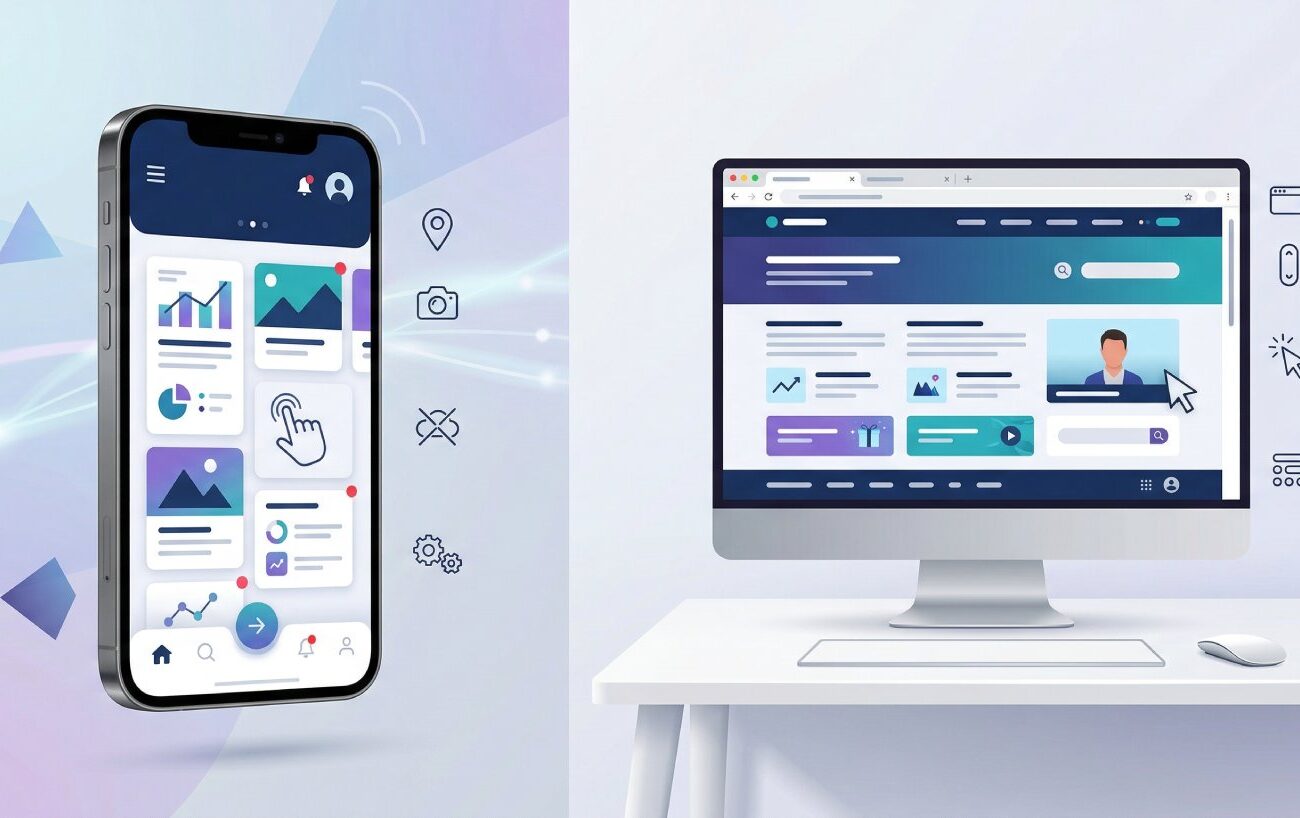
Mobile App vs Website: When Does Your Business Need an App? A lot of digital projects start with a deceptively simple question: should we build an app, a site, or both? The reason this decision feels hard is that it’s not only a design or engineering choice—it’s a distribution choice (how people find you), a behavior choice (how often people use you), and an operations choice (how frequently you can update without friction). That’s why the debate around mobile app vs website remains so common in business planning. From a search and discovery standpoint, the web is still the most universal layer: a link is shareable, indexable, and device-agnostic. Google has explicitly documented that it primarily uses the mobile version of a site’s content for indexing and ranking (mobile-first indexing), which raises the stakes for getting the mobile website experience right. From a retention and “repeat usage” standpoint, mobile apps can create an always-available presence on the home screen, plus deeper operating-system integrations—especially around notifications and device features. At the same time, apps come with platform governance: store policies, review processes, and more structured release management than most websites. This article is written for Ucheed readers and follows an educational lens: definitions, trade-offs, and decision criteria you can apply to your own roadmap. Ucheed publishes a broad suite of digital services (web, mobile, e-commerce, and more), so the most useful guidance is the kind that helps you choose the right delivery model for your users—not the trendiest one. Understanding the difference between mobile app and website Before you can decide mobile app vs. website, you need to define what you mean by “app” and “website,” because teams often mix multiple categories into one comparison. The difference between mobile app and website is not only “installed vs not installed.” It includes distribution, capabilities, update mechanics, and the user’s expectations about what will happen when they tap an icon. A website is delivered through the browser and accessed by URL. A key modern baseline is a “responsive website,” meaning the layout adapts across screen sizes using design and engineering patterns such as fluid grids and media queries—popularized as responsive web design. In real conversations about mobile app vs responsive website, this matters because a truly high-quality responsive site can meet the needs of many businesses without creating “download friction.” A mobile app (in most business contexts) means a platform-specific application distributed through app stores and installed on the device. That distribution model is not neutral: Apple maintains App Store Review Guidelines and reviews apps and updates submitted to App Store Connect, and Google provides a structured “prepare for review” workflow for Play submissions. Those requirements shape timelines, QA, privacy disclosures, and release planning—so they are part of the difference between mobile app and website in practice. Then there is the middle ground: progressive web apps (PWAs). The web platform has evolved to support experiences that feel “app-like” while still running in a browser. MDN describes a PWA as built with web technologies but providing an experience similar to a platform-specific app: it can be installable, can work offline and in the background, and can integrate with device capabilities (within platform limits). Web.dev also emphasizes that a PWA can be installable and reach many devices from a single codebase. This middle ground often changes the framing of mobile app vs. website because it introduces a third option. One concrete PWA capability is offline resilience. MDN explains that offline operation is enabled by adding a service worker; service workers can take control of network requests, serve cached responses, and improve reliability under weak connectivity. This is a practical consideration in mobile app vs responsive website decisions for users who travel, work in the field, or operate in low-signal environments. So the difference between a mobile app and a website can be summarized this way: websites are optimized for reach and instant access; apps are optimized for repeat usage and deeper device integration; PWAs aim to combine parts of both, but with platform constraints that you must plan for. Mobile app vs website for business decision factors If you’ve ever asked “mobile app vs website which is better?” you’ve asked a natural question—but it’s incomplete. Better for acquisition, better for retention, better for time-to-market, or better for long-term cost of ownership? The more actionable framing is: in this mobile app vs website for business scenario, what user behavior are we trying to optimize? A framework that works across industries is to evaluate five decision factors. Put simply, these factors determine when to build a mobile app vs website. Use frequency and urgency. If a user needs your product once in a while—reading content, checking hours, browsing services—a mobile-optimized website usually wins because it’s one tap away through search, social, or a saved link. If a user needs the product daily or weekly, speed of access matters, and a mobile app may reduce friction because it can be launched from the home screen with fewer steps. This frequency test is often the fastest way to clarify mobile app vs website for business decisions. Device capability requirements. If your experience depends on device features (camera capture, location routing, background processing), an app is often simpler to deliver reliably across OS versions. Android’s documentation shows how sensitive data and restricted actions are governed by permission types, including runtime permissions that must be requested at the moment of use—so your UX must be designed around trust and transparency. The more “device-dependent” your product, the more likely it is that when to build a mobile app vs website points toward app-first or app-plus-web. Re-engagement and notifications. Many teams assume notifications automatically decide mobile app vs website which is better, but it’s more nuanced. PWAs can use Push and Notifications APIs (with service workers) in supporting environments. Apple’s WebKit and Safari release notes explain that iOS and iPadOS added support for Web Push notifications for web apps saved to the home screen—meaning the user must install the PWA
Business Owner ‘s Guide: 7 Critical Mistakes to Avoid for Explosive Growth

No One Tells You How to Be a Business Owner but Here’s What You Should Know Becoming a business owner is one of the most exciting journeys you can embark on. The promise of freedom, leadership, and creating something meaningful drives thousands of people to build their own companies every year. But what many new entrepreneurs quickly realize is: no one tells you how to be a business owner not really. It’s more than just having a product or service. Running a business demands that you juggle strategy, marketing, operations, quality control, technology, and customer experience all at once. In this guide, we’ll share insights on building a sustainable business strategy by looking at key areas that matter from digital marketing and SEO to operations and branding. We’ll also explore how tools like Sofiia AI, e-commerce solutions, web design, and SEO services offered by digital partners like Ucheed can make that journey smoother. Start with a Holistic Business Strategy At the core of every successful business is a thoughtful strategy. Not just a business plan, but a comprehensive roadmap that looks beyond funding and products. Start by asking yourself the big questions: Who is my ideal customer? What is my unique value proposition? How will my operations scale with demand? What tools and technologies can support my growth? Your business strategy must integrate marketing, sales, operations, technology, and quality of service. Ignoring one area often leads to breakdowns in others. For instance, you could have a great product and branding, but if your operations are inefficient or your customer experience is lacking, you’ll struggle with retention and reputation. Mapping out these components early either through planning software or a consulting partner can set you up for smoother execution. Why Web Design Is More Than Just Aesthetic Too many new business owners treat web design as a one-time creative task. But in reality, it’s a strategic asset that influences user behavior, trust, and even conversion rates. A well-designed website should: Guide users clearly to your core offerings Be mobile-friendly and fast-loading Reflect your brand’s personality Integrate seamlessly with your e-commerce system, CRM, or booking tools Modern business websites also need to prioritize UX (User Experience) and UI (User Interface) design. These aren’t just techy terms they directly affect whether visitors stay on your site or leave within seconds. Platforms like Ucheed understand this nuance, building web design solutions that combine visual appeal with functionality. Whether you’re starting from scratch or rebuilding an old site, don’t underestimate how much your website influences your brand and growth. E-Commerce Isn’t Just Selling Online It’s Building Experience Selling products online may sound simple, but the actual process involves a lot more than setting up a digital store. To run a successful e-commerce business, you need: A secure and intuitive shopping experience Smart product categorization Fast checkout systems Integrated payment gateways Mobile responsiveness SEO-friendly structure for product pages What sets a successful store apart isn’t just traffic it’s the ability to convert that traffic into loyal customers. This is where custom e-commerce solutions come into play. Instead of using cookie-cutter templates, consider platforms like Ucheed’s e-commerce solutions, which offer customization that reflects your unique brand and makes back-end operations easier to manage. Remember, e-commerce isn’t just about tech it’s part of your overall customer experience. SEO: Your Digital Lifeline Many business owner underestimate the power of Search Engine Optimization (SEO) until they realize no one is finding their website organically. Good SEO can: Drive consistent, long-term traffic Reduce dependency on paid ads Improve credibility in your industry Increase local visibility if you serve a specific region The mistake many make is thinking SEO is a one-time task. In truth, it’s an evolving strategy that involves: Keyword research On-page optimization (like metadata and headers) Content strategy (blogs, landing pages, product descriptions) Backlinks and technical SEO (site speed, mobile compatibility) Agencies like Ucheed offer comprehensive SEO services that evolve with algorithm changes and competition. When built into your core marketing strategy, SEO becomes a silent driver of growth working even when you’re offline. Sofiia AI: Making Smarter Business Decisions One of the most exciting developments in digital strategy is the rise of AI-driven tools. Sofiia AI, a proprietary product offered by Ucheed, stands out by offering business owner intelligent insights and automation features that reduce guesswork. With tools like Sofiia AI, you can: Analyze customer behavior in real-time Forecast sales trends Automate repetitive tasks Improve operational efficiency Personalize marketing based on data The power of AI in business operations can’t be overstated. As a business owner, leveraging tools like Sofiia AI allows you to focus more on strategy and less on micromanagement. Think of it as hiring an extra brain that never sleeps. Digital Marketing Isn’t Optional In today’s connected world, digital marketing is no longer optional it’s essential. But the challenge is that digital marketing is a broad term. It includes everything from: Paid ads (Google Ads, Meta Ads) Email marketing Social media content Retargeting and funnels Influencer outreach Analytics and performance tracking New business owner often spread themselves too thin trying to handle it all. Instead, the better approach is to build a digital marketing strategy for startups that focuses on one or two core channels and builds momentum from there. Growth-oriented agencies like Ucheed can help design and execute campaigns tailored to your niche and budget. Their strength lies in combining creativity with data to deliver real, measurable results. Branding: It’s More Than Just a Logo Your brand is how people feel about your business. That feeling is shaped by everything from your visual identity and website to your tone of voice and customer service. Effective branding for small businesses includes: A memorable logo and consistent color palette A unique voice in your messaging Branded digital assets (like pitch decks, social media templates) Emotional resonance with your target audience Startups often treat branding as a last-minute thought, but the truth is it shapes first impressions. A strong brand builds trust and gives you
Web Design in 2025: Trends, Strategies & Digital Insights
Nearly 95% of a visitor’s first impression of your business comes from your web design, making it a crucial factor in driving sales. This is why incorporating modern web design into your marketing strategy has never been more essential. But what cutting-edge web design trends can we expect to see in 2025, and how can you leverage them to revitalize your website? The State of Web Design in 2025: What’s New? 1. What Trends Are Shaping Web Design in 2025? AI-Powered Personalization AI is no longer optional in web design. From adaptive interfaces that change based on user preferences to AI chatbots providing real-time support, personalization is driving user engagement. Statistic: 80% of users are more likely to convert on a website offering personalized experiences (Forrester, 2025). Dark Mode Dominance With an increasing number of users preferring dark mode, it’s now a design staple. It enhances aesthetics while reducing eye strain, creating an immersive browsing experience. Sustainable Design Practices Websites are adopting lightweight coding, optimized hosting, and reduced energy consumption to align with eco-conscious values. Sustainability is no longer a trend it’s an expectation. 2. Why Is User Experience (UX) Central in 2025? Speed Is King With 5G networks and increasing expectations for instant loading, websites must prioritize speed. A delay of even 1 second can decrease conversions by 7%. Insight: Use techniques like lazy loading and CDN integration to enhance speed. Mobile-First Design Over 75% of global traffic now comes from mobile devices. Mobile-first design ensures seamless navigation and accessibility for this growing user base. 3. How Has SEO Evolved in 2025 for Web Design? Core Web Vitals Dominate Google’s Core Web Vitals (loading, interactivity, and visual stability) remain critical. Websites that pass these metrics rank higher and retain more users. Tip: Focus on optimized images, fast server response, and efficient JavaScript. Voice Search Optimization With the rise of AI assistants, websites must cater to conversational keywords. Design content for questions like, “What are the best web design trends in 2025?” Key Strategies for Effective Web Design in 2025 1. Embrace Immersive Visuals Leverage augmented reality (AR) and 3D design to create engaging, interactive websites. From product try-ons to virtual tours, these tools add a dynamic layer to user experiences. 2. Prioritize Accessibility Designing for inclusivity is no longer optional. Ensure your site meets WCAG 2.1 standards, offering screen-reader support, alt text for images, and color contrast considerations. 3. Leverage Microinteractions Small animations or visual cues enhance user interaction. Whether it’s a button changing color on hover or a subtle scroll animation, these details create memorable experiences. 4. Incorporate Minimalism Clean, simple designs are easier to navigate and faster to load. Prioritize content clarity, white space, and intuitive navigation. 5. Test, Optimize, and Repeat Use tools like A/B testing, heatmaps, and analytics to continuously improve your design. Websites must evolve with user behavior to remain relevant. Frequently Asked Questions About Web Design in 2025 1. How Can Businesses Stay Competitive? Focus on personalized experiences, fast-loading pages, and mobile-first design. Partner with agencies like Ucheed to access cutting-edge web design solutions tailored to your goals. 2. What Technologies Should I Invest In? Invest in AI tools, AR features, and headless CMS platforms. These technologies ensure your website stays innovative and scalable. 3. What’s the Role of Content in Web Design? Content is integral to design. Use storytelling, concise messaging, and SEO-optimized text to enhance user engagement and search rankings. 4. How Do I Ensure My Website Is Future-Proof? Regular updates, staying informed about design trends, and leveraging the expertise of providers like Ucheed ensure your website adapts to changes effectively. 5. How Important Are Security Measures? With cyber threats on the rise, security is paramount. SSL certificates, two-factor authentication, and GDPR compliance build trust and protect user data. Web design in 2025 is about merging creativity with technology to create exceptional user experiences. By focusing on trends like AI-driven personalization, sustainable design, and accessibility, businesses can stay ahead in an increasingly competitive digital landscape. Need help navigating the complexities of modern web design? Ucheed offers tailored solutions to elevate your online presence. From concept to execution, we’re here to help you succeed.
Online Presence: The 4 Critical Pillars for Your Digital Success.

Beyond the Business Card: Building a Purpose-Driven Online Presence that Generates Growth In the hyper-connected world of modern business, the concept of an online presence has evolved far beyond a simple digital business card. For many, it is viewed as a static asset a website, a social media profile, or a list of services. However, in a digital landscape where 4.9 billion internet users vie for attention, merely existing online is no longer a viable strategy. The businesses that thrive are those that view their digital identity as a foundational, strategic asset, one that is meticulously crafted and built with purpose to generate trust, authority, and tangible growth. Businesses today face a multitude of challenges, from low organic visibility and poor brand recognition to inefficient sales processes and missed opportunities. The solution to these problems is not a quick fix or a fragmented collection of digital tools. Instead, it requires a deliberate, strategic construction of a robust digital identity. This guide provides a blueprint for building such a presence, anchoring its methodology in a core philosophy that recognizes time as a precious asset and digital transformation as a meticulous process of creation. This is the essence of Ucheed, a company whose very name is derived from the Arabic word يشيد (yusheed), which means “to build”. This is not a service; it is a purpose-driven mission to craft and architect a digital foundation that empowers a client’s ultimate success. The Strategic Blueprint: From Raw Ideas to a Digital Masterpiece The Foundational Narrative: Building to “Be the Number One” The core identity of a company is often hidden in its very name. For Ucheed, its name, which means “to build” in Arabic, is not a marketing term but a direct reflection of its founder’s visionary outlook. This foundational concept signifies a purpose that extends far beyond transactional service provision. The company does not simply create websites or apps; it architects a digital presence that empowers its clients to “Be the Number One” in their respective markets. This powerful link between the act of “building” and the state of “being” is a critical causal relationship. The company’s core mission is to provide a solid digital foundation, and it is this foundational work that enables its clients to achieve a position of market leadership. This purpose-driven foundation is further underscored by the CEO’s guiding philosophy that “time is our most precious asset”. This statement is more than a simple business principle; it is a strategic imperative that justifies and guides the development of the company’s key products. The CEO’s belief that “waiting for perfection often leads to missed opportunities” serves as the philosophical underpinning for solutions designed to expedite the sales cycle and automate growth. At the heart of this philosophy is Sofiia AI, a proprietary AI assistant that is the physical embodiment of this belief system. It is a tool explicitly designed to save valuable time and accelerate growth by automating the sales and customer service processes. This connection elevates Sofiia AI from a mere product to a manifestation of Ucheed’s core belief in acting now to seize opportunity. Ucheed’s own history further reinforces this strategic evolution. The company began by offering affordable web development tools to young professionals before recognizing a critical market gap for creative, user-friendly web design. This recognition prompted a strategic pivot in 2020 to become a full-service digital agency. This history demonstrates a deep understanding of market needs and positions the company as a dynamic, responsive partner that continuously adapts to deliver high-impact solutions, moving beyond basic functionality to a focus on comprehensive user experience and business growth. The Ucheed Methodology: Sculpting and Mining Digital Assets A powerful and central metaphor frames Ucheed’s methodology for strategic digital transformation: the “sculpting and mining of raw stones, transforming them into construction-ready materials”. This metaphor is the guiding framework for the entire process of building a digital asset. The client’s initial ideas are viewed as the “raw stones” full of potential but lacking the refinement required for professional application. The first stage, “mining,” represents the meticulous research and strategic planning required to uncover the true potential of the client’s concept. This is a crucial step for establishing a robust and sustainable online presence. The subsequent stage, “sculpting,” is the creative and technical process of molding these raw ideas into professional digital assets. It involves the application of expert knowledge and precision to ensure the final product is not only functional but also aesthetically compelling and aligned with the client’s business goals. The final result, the “construction-ready materials,” represents the robust and functional components of a successful online presence, ready to be deployed in the competitive marketplace. This transformative process is made transparent through a clear, four-step framework. The journey begins with the Meet & Greet, a collaborative discussion to understand the client’s goals and target audience. This is followed by the Draft & Propose phase, where Ucheed conducts thorough research to propose a tailored plan and a detailed quote. The Design & Build stage executes the project with clear deadlines and consistent communication, ensuring alignment every step of the way. Finally, the Test & Launch phase ensures the final digital product undergoes rigorous testing before being launched to guarantee flawless performance and functionality. This process-oriented approach demystifies the complex world of digital development for clients, building confidence and trust through a predictable and well-communicated workflow. The Core Pillars of a Resilient Digital Presence Pillar One: The Cornerstone of Strategic Web Design A business’s website is the cornerstone of its digital identity. It is not merely a static brochure but a dynamic hub of its online presence, serving as the primary point of contact for prospective customers. Strategic web design goes far beyond aesthetics to focus on a site’s underlying functionality and performance. A truly effective website must be: Responsive and Mobile-Friendly: With a significant portion of web traffic originating from mobile devices, a responsive design is a non-negotiable requirement. It ensures a seamless and functional experience across all devices, preventing
A World Without WhatsApp: The Immediate Fallout

The Digital Earthquake: How Over-Reliance on WhatsApp Exposes the Urgent Need for Business Resilience The Illusion of Permanence: A World Without WhatsApp The concept of a world without ubiquitous digital platforms once seemed like a distant, almost science-fiction scenario. However, on October 4, 2021, billions of users and countless businesses experienced a profound glimpse into that reality. The unprecedented six-hour global outage of Facebook and its affiliated services including Instagram and the widely used messaging application, WhatsApp was a visceral event that transcended a simple technical glitch. For many, the sudden, complete silence of these networks was disorienting, exposing a critical and often-overlooked fragility within our digital infrastructure. This event can be viewed as a digital earthquake, a sudden systemic shock that did not physically damage property but instead exposed the brittle, interconnected foundations upon which much of the global economy now stands. This widespread outage had immediate and profound financial implications. The six-hour downtime was the longest that these services had faced since 2008. Public reports indicate that Meta, the parent company, lost approximately US 163,565 in revenue every minute, which amounted to an estimated US 60 million over the outage period. The cascading financial impact also saw the personal fortune of its founder diminish by US$7 billion, while the company’s shares experienced a significant 4.9% decline. The immense scale of these figures underscores a fundamental reality: the digital systems that facilitate communication and commerce are not immune to failure, and their disruption can have a staggering economic impact. Beyond the financial headlines, the operational fallout for businesses was immense. The outage was not simply an inconvenience; it was a moment of complete paralysis for many small and medium-sized enterprises that had come to rely on the platform as their primary communication channel with customers. For these businesses, the downtime meant a complete gap in their communication bridge with clients, leaving customer queries unanswered and business discussions stalled. Businesses that had invested heavily in social media marketing found their scheduled posts and campaigns rendered useless, risking the considerable time and financial resources dedicated to them. This disruption revealed a core vulnerability in a strategy built on a single, external point of failure. The incident was not the result of an external cyberattack but rather a faulty configuration change to the Border Gateway Protocol (BGP) routers that coordinate network traffic. The irony was that the very network needed to fix the problem was the one that was down, and staff members were reportedly locked out of physical data centers because their key cards depended on the non-functioning internal system. This critical breakdown demonstrates how deeply intertwined and mutually dependent these digital systems have become, where a seemingly minor internal error can trigger a complete systemic failure that impacts billions worldwide. The Strategic Shift from Reactive to Proactive The experience of the global messaging app outage serves as a powerful illustration of the fundamental difference between a reactive and a proactive business strategy. The vast majority of companies caught in the paralysis of the event were operating from a reactive position, a state of mind defined by the “fix-it-when-it-breaks” mentality. This approach is characterized by a constant scramble to address problems after they have already occurred, creating a continuous cycle of crisis management. When an IT department is trapped in this state, it functions less like a strategic partner and more like an emergency response unit, with teams perpetually rushing from one urgent problem to the next without addressing the underlying causes. A reactive approach, while requiring minimal upfront planning, creates unpredictable workloads and stress-filled environments that can lead to employee burnout and frequent business disruptions. The reliance on a single, dominant communication app without any contingency planning is a textbook example of this model. When the service went down, businesses were left without a clear plan, frantically searching for alternative channels and struggling to maintain continuity. The immense cost in terms of lost revenue, damaged customer relationships, and operational chaos is a form of operational debt that businesses accrue until a crisis forces them to pay in full. This experience validated the growing belief that waiting for a problem to occur is no longer a viable strategy in a fast-paced digital world. Conversely, a proactive strategy flips this script entirely. It focuses on the prevention of problems before they become business-critical issues. This requires a significant shift in philosophy, where resources are invested in strategic planning, continuous monitoring, and preemptive solutions rather than in emergency response. The core principle of a proactive strategy is foresight; it’s about anticipating needs and addressing potential issues before customers even realize they exist. This forward-thinking approach not only reduces the risk of disruption but also builds stronger customer relationships and provides a distinct competitive advantage. The development of advanced automation and AI solutions, for instance, is a direct implementation of this proactive philosophy. By automating repetitive but critical tasks, such as lead qualification and customer support, businesses can create a resilient operational framework that functions seamlessly, even when external platforms fail. This frees up human teams to focus on high-value, creative activities, such as building deeper customer relationships and developing strategic initiatives. The proactive business does not wait for an outage to force it to act; it builds a resilient system from the start, one that anticipates and mitigates risks, ensuring that it is always in a position to move forward. This approach transforms a company from a reactive entity into a strategic leader that operates with foresight and purpose. Architecting Digital Resilience: The Blueprint for Business Continuity The modern business environment demands more than just robust cybersecurity. While security is crucial for protecting digital assets from malicious threats, the global communication app outage demonstrated that businesses also require a new, more comprehensive capability: digital resilience. Security is often about a defensive stance, about “locking up and hunkering down” to prevent an attack. In contrast, digital resilience is about maintaining operational continuity and the ability to “stand up to do business while fighting
7 Big Reasons Audio Matters: Why You Need to Listen Up in 2024

Why You Need to Listen Up in 2024: 7 Big Reasons Audio Matters Introduction In today’s fast-paced web ecosystem, audio is more than just background noise it’s a powerful tool that shapes how we connect, engage, and consume content. In 2024, sound is redefining digital experiences through podcasts, voice search, sonic branding, and more. Let’s explore seven compelling reasons why voice matters more than ever and how you can harness this power to make your brand resonate. 1. Podcasts: Stories in Your Ears 🎧 A Personalized Listening Experience Imagine a radio show built around your interests, available anytime, anywhere. That’s the magic of podcasts they offer tailored content that listeners binge, binge again, and share far and wide. Convenience: Listen while commuting, working out, or doing chores. Depth of content: In-depth interviews, storytelling, tutorials far beyond what text alone can deliver. Podcast Growth in 2024 Millions of listeners tune in monthly globally. Brands and creators are producing niche shows: tech, wellness, history, and more. Monetization through sponsorships, ads, and premium content is thriving. Takeaway: Starting a podcast can boost brand authority and foster deeper connections via sound content. 2. Voice Search: Talk Instead of Type The Rise of Conversational Search From Siri and Alexa to Google Assistant, voice-activated systems dominate the web. People are increasingly asking real questions out loud: “Hey Siri, what’s the best running shoes under $100?” This shift has direct implications for SEO and content. SEO Implications Questions often start with who, what, why, how. Content needs clear answers and conversational tone. Featured snippets and position-zero become more attainable. Action Steps: Use FAQs with natural phrasing. Structure content to match spoken queries. Optimize for long-tail, question-based search terms. 3. Sonic Branding: Catchy Tunes, Strong Brands More Than a Logo It’s a Sound Brands are no longer just visual they’re audible. Recognizable sounds, jingles, and audio signatures (think Netflix dun dun, Intel bong) create powerful brand impressions. Examples: Netflix’s iconic ta-dum Intel’s five-note signature Business Benefits Instant recognition across platforms Emotional triggers that reinforce brand values Cohesive branding for ads, podcasts, and web content How to Create Sonic Branding: Identify brand personality (modern, quirky, trustworthy). Collaborate with composers or audio branding agencies. Consistently use your sonic trademark across all touchpoints. 4. Emotional Connection: Sounds That Touch the Heart Music and sound have a unique ability to evoke emotion nostalgia, excitement, calm. Brands use curated audio to forge emotional bonds. 🎵 Retail stores use background music to influence behavior. 🎵 Videos, podcasts, and ads rely on mood-setting tracks. 🎵 In-app feedback sounds (like notification “pings”) reinforce user actions. Best Practices: Align music and sound with your brand’s voice. Don’t overpower balance is key for modern audiences. Test different audio moods to see what resonates. 5. Accessibility for Everyone Audio as a Layer of Inclusion Not everyone can see content clearly good audio ensures broader accessibility. Screen readers use voice to describe web content. Podcasts offer alternatives for users with reading difficulties or visual impairments. Captions + voiceover options enhance multimedia content. W3C Accessibility Guidelines highlight the importance of sound alternatives on the web. Practical Tips: Provide transcripts for podcasts and videos. Ensure your site is compatible with screen readers. Use clear, descriptive alt text for visuals. 6. On-the-Go Convenience In a world where multitasking is the norm, audio fits seamlessly into everyday life. Audio ≠ Interruptive Unlike videos or long-form text, you can: Listen and drive, without taking your eyes off the road Follow recipes while cooking Tune in during workouts or chores Audio content is portable, hands-free, and highly convenient. Usage Stats: Commuters spend hours weekly plugged into podcasts or music. Smart speakers are now common in homes and cars. Brands with strong voice presence stay top of mind during daily routines. 7. Staying Trendy: What People Love Right Now Riding the Wave of Audio Popularity Certain trends make it’s usage more widespread: Trend Insight Short-form episodes Bite-sized content is trending Live audio platforms Clubhouse-esque voice rooms Immersive audio Binaural, 3D, and spatial audio NFTs + audio collectibles A new frontier in digital content Why It Matters: Early adoption means early exposure Staying relevant in audio-savvy audiences Makes brands feel current and forward-looking 8. Bonus Reason: SEO & Content Strategy Synergy Adding audio enriches your content ecosystem: Blog post + audio transcript improves readability and SEO. Podcast episode + show notes + blog summary extends reach. Video with voiceover + written summary appeals to all learning styles. Overall Benefits: Better on-page SEO More entry points for users Greater shareability across platforms How to Integrate Audio in 2024: A Strategic Guide Here’s a hands-on roadmap to bring sound into your strategy: Step 1: Audit Your Content What formats do you already have? What audio can you add: intros, sound effects, voice-guided tutorials? Step 2: Set Your Goals Brand recognition via sonic branding? Engagement via educational podcasts? Accessibility compliance? Step 3: Create or Curate Quality Audio DIY with tools like Audacity, GarageBand Or hire pros for jingles and voiceovers Step 4: Publish Across Platforms Host podcast on Spotify, Apple Podcasts, Google Podcasts Embed episodes on your web site Use streaming or downloadable audio files Step 5: Optimize for Discovery Transcripts with keyword placement Natural conversational hooks for voice search Good metadata + show notes Step 6: Promote and Repurpose Share snippets on social Collaborate with influencers Use your sonic brand in ads, videos, and app sounds Step 7: Measure and Iterate Track downloads, listens, time spent, engagement Get feedback voice can be powerful with small changes FAQs (People Also Ask) Q1: How important is audio SEO compared to text SEO? Answer: it supplements text SEO best used alongside transcripts, metadata, and natural-sounding Q&A that feed voice search. Q2: How do I measure it’s effectiveness? Answer: Look at downloads, listens, average duration, bounce rate, and conversion metrics tied to audio content. Q3: Can small brands leverage sonic branding? Answer: Absolutely. Even a simple jingle or voice tagline can become your voice signature. Q4: Should I outsource it’s production? Answer: Depends