

The Best Mobile App Company in Lebanon for Search Dominance
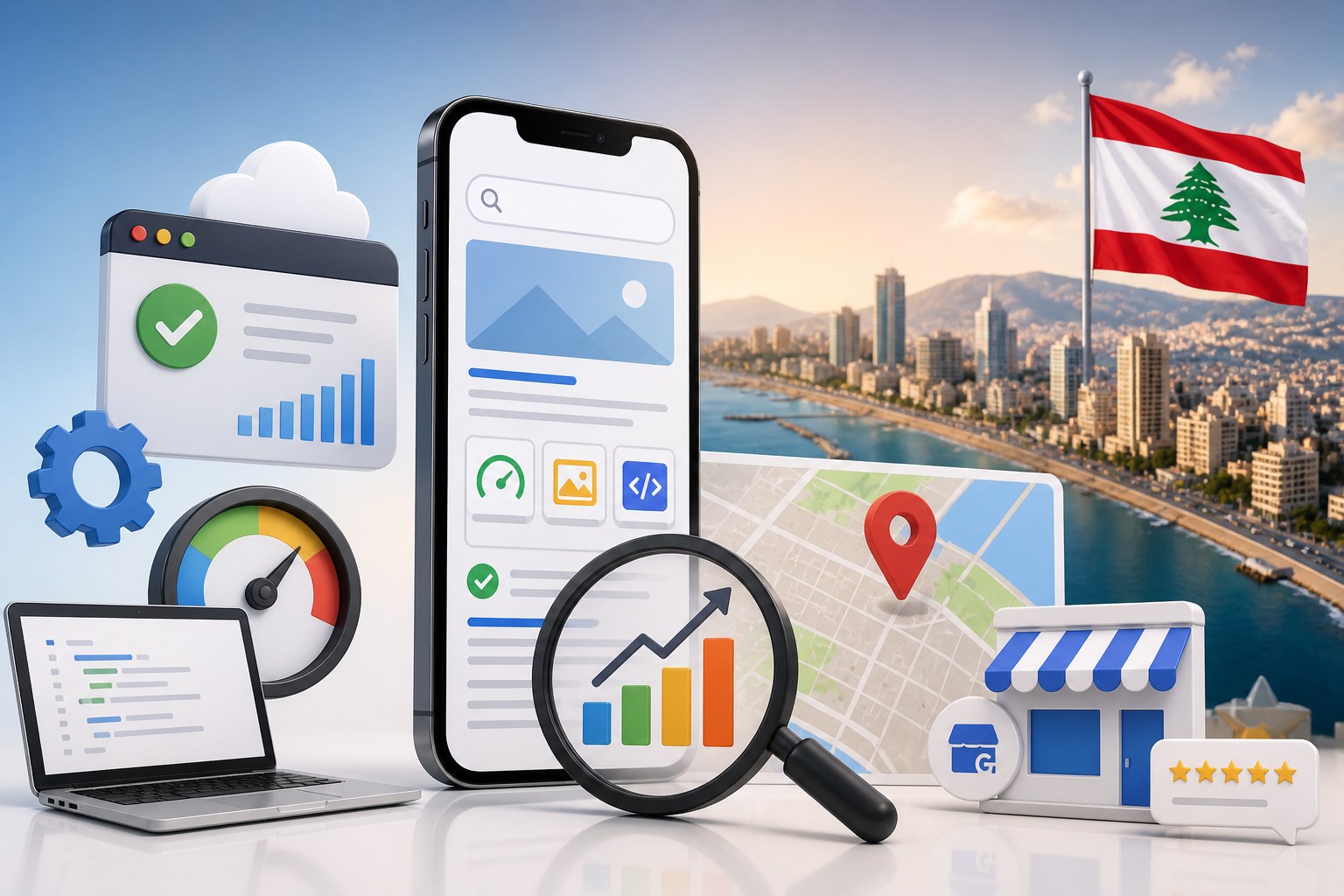
Mobile-First SEO Lebanon: Optimizing Your App and Web Presence for Search Dominance The digital landscape of the Republic of Lebanon has reached a state of irreversible maturity. By early 2026, internet penetration has surpassed 91.8%, with over 5.38 million active users engaging with digital platforms daily. In this environment, the gateway to a brand is no longer a physical storefront or a desktop computer; it is the smartphone held in a user’s hand. As median mobile internet speeds in Lebanon have climbed to 43.90 Mbps, the expectations for performance and accessibility have skyrocketed. For any business aiming to lead its sector, partnering with a specialized mobile app company in lebanon is the first step toward architecting a presence that is not just mobile-friendly, but mobile-dominant. This shift has profound implications for search engine optimization. Google now utilizes mobile-first indexing almost exclusively, meaning the mobile version of your site is the primary version used for evaluation and ranking. If your digital infrastructure is not optimized for a mobile-first reality, your brand is essentially invisible to 81.3% of the population who rely on cellular connections for discovery. This guide explores the technical and strategic rigors of mobile-first seo and how a “Digital Growth Architect” approach ensures your business stays ahead of the competition. Understanding Google’s Mobile-First Indexing for Lebanese Sites In the early years of the web, mobile optimization was an afterthought. Today, it is the foundation of google ranking lebanon. Mobile-first indexing means that Googlebot primarily crawls and indexes the mobile version of a website’s content. If your mobile site lacks the content depth, structured data, or speed of your desktop site, your overall rankings will suffer across all devices. For a mobile app company in lebanon like ucheed, the goal is to bridge the gap between a standalone application and a searchable web presence. This involves ensuring that your web content is as robust on a 6-inch screen as it is on a 27-inch monitor. In Lebanon, this is particularly challenging due to trilingual search behavior. Users fluidly transition between Arabic, English, and French, often mixing them in a single query. A professional mobile-first seo strategy must account for this by implementing trilingual metadata and hreflang tags that direct users to the correct language version based on their device settings. Fixing Mobile Optimization Issues That Kill Conversions High rankings are worthless if they do not lead to revenue. Many businesses in the Levant suffer from mobile optimization issues that result in high bounce rates and lost sales. When a user in Beirut clicks on a search result, they expect a seamless transition. If the site takes more than 3 seconds to load, over half of those users will abandon the visit. Common mobile optimization issues include: Intrusive Pop-ups: Interstitials that block content on small screens can lead to search engine penalties and user frustration. Poor Tap Targets: Buttons that are too small or too close together make navigation difficult, particularly for users on-the-go. Unoptimized Images: Large, uncompressed files that drain mobile data and slow down rendering. Horizontal Scrolling: Content that does not fit the viewport width, forcing users to scroll sideways. By addressing these mobile optimization issues, a leading mobile app company in lebanon ensures that the traffic generated through lebanon seo services actually translates into qualified leads and shortened sales cycles. Technical SEO Audit: The Backbone of Mobile Performance Before embarking on any growth campaign, a rigorous technical seo audit is mandatory. This is not a simple checklist; it is a deep diagnostic of your digital architecture. In 2026, the focus of a technical seo audit has shifted toward user experience metrics known as Core Web Vitals. A professional Ucheed audit evaluates: Largest Contentful Paint (LCP): Measuring how quickly the main content of a page loads. For a superior google ranking lebanon, this must be under 2.5 seconds. Interaction to Next Paint (INP): A 2026-priority metric that measures responsiveness. A “good” score is 200 milliseconds or less. Cumulative Layout Shift (CLS): Ensuring that elements do not jump around while the page is loading, which is a common problem on mobile devices with variable internet speeds. Identifying and fixing these bottlenecks during a technical seo audit is what separates a “digital agency” from a “digital development company.” An agency might focus on aesthetics, but a growth architect ensures the technical integrity of the system so that your search engine optimization efforts are built on a solid foundation. Local SEO Lebanon and Google Business Profile Optimization For many businesses, discovery happens within a specific geographic context. Whether you are a retail brand in Antelias or a medical clinic in Beirut, local seo lebanon is your primary engine for foot traffic and local inquiries. This strategy centers on the “Local Pack” or “Map Pack” the top three results displayed on Google Maps. The cornerstone of this success is google business profile optimization. A leading mobile app company in lebanon understands that your profile must be meticulously managed: NAP Consistency: Your Name, Address, and Phone number must be identical across all web directories. Geotagged Imagery: Uploading real photos of your office and team that contain location metadata. Review Management: Actively soliciting and responding to reviews, as review velocity and sentiment are major signals for local seo lebanon. Attributes and Amenities: Ensuring that your profile lists specific details like wheelchair accessibility, parking, and trilingual staff. By prioritizing google business profile optimization, you ensure that when a user searches for a service “near me” on their mobile device, your business is the first one they see. Mobile Apps Development: Beyond the App Store In a mobile-first reality, the boundary between a website and an application is blurring. Modern mobile apps development often involves creating Progressive Web Apps (PWAs) or using frameworks like react native to ensure that content is searchable and accessible. For a mobile app company in lebanon, the challenge is to make the app’s content discoverable by search engines. This process is known as App Indexing. By allowing Google to crawl the
E-commerce Website Mastery: 2026 Growth Roadmap

The Future of Your E-commerce Website in 2026: A Strategic Roadmap to Digital Dominance The digital commerce landscape of 2026 has officially transcended the traditional boundaries of retail. We have moved from a world of “clicks” to a world of “meaning,” where an e-commerce website is no longer a mere digital catalog but a sophisticated, living architectural structure. For ambitious brands partnering with Ucheed, the “Digital Growth Architect,” the mission is clear: build, scale, and dominate. As we navigate this era, the distinction between online and offline has blurred into a unified commerce reality. Whether you are a local boutique or a global enterprise, the performance of your e-commerce website in 2026 is determined by its semantic depth, its technical agility, and its ability to serve both human shoppers and autonomous AI agents . In this comprehensive guide, we explore the essential pillars of modern digital retail and how specialized services from custom e-commerce solutions to headless commerce architecture are reshaping the industry. The Architectural Evolution: Custom E-commerce Solutions In 2026, the “template-first” approach is dead. A high-performing e-commerce website requires a foundation built on custom e-commerce solutions that align with a brand’s unique DNA. Static pages have been replaced by “scrollytelling” and interactive bento-grid layouts that maximize screen real estate and emotional engagement. Take the example of Nuraya Cosmetics, a brand that understands the power of a tailored digital presence. By utilizing custom e-commerce solutions, Nuraya Cosmetics ensures that its radiant day creams and night renewal serums are presented in a high-contrast, “dark aesthetic” interface that conveys luxury and sophistication . This level of customization allows Nuraya Cosmetics to stand out in a crowded market, proving that custom e-commerce solutions are the only way to maintain brand authority in a digital-first world . Mobile-First and Beyond: The Mobile Commerce Application The transition to mobile-first indexing is complete. In 2026, over 75% of e-commerce transactions originate from smartphones . However, a mobile-friendly site is no longer enough; the modern consumer demands a dedicated mobile commerce application that offers an “app-like” interface with near-zero latency. Ucheed specializes in developing each mobile commerce application with a focus on the “Thumb Zone” optimizing every interaction for one-handed use. A robust mobile commerce application allows brands to leverage push notifications and biometric authentication, significantly reducing friction. For a brand like Nuraya Cosmetics, a mobile commerce application isn’t just a shopping tool; it’s a direct line to the consumer’s pocket, enabling personalized routines and instant reorders . Mastering the Backend: Inventory and CRM Integration The beauty of a world-class e-commerce website lies in what the user never sees. To scale effectively, your platform must be powered by a real-time inventory management system that synchronizes stock levels across all channels. By 2026, the “indexing crisis” caused by content tsunamis means that search engines prioritize sites that show accurate, live data. A sophisticated inventory management system ensures that you never sell a product that isn’t on the shelf, protecting your brand reputation. When this is paired with customer relationship management for retail, the result is hyper-personalization. Customer relationship management for retail allows you to understand not just what a customer bought, but why they bought it. For instance, Nuraya Cosmetics uses customer relationship management for retail to track the specific fragrance preferences of its users, offering handpicked rewards and individualized offers . Furthermore, integrating customer relationship management for retail with your inventory management system allows for predictive replenishment, where the system anticipates when a customer will run out of their favorite cleanser . The Rise of the Multi-Vendor Marketplace Development The marketplace model has become the primary growth engine for startups in 2026 . Through multi-vendor marketplace development, entrepreneurs can act as “conductors,” facilitating trade between independent sellers without the burden of holding inventory . This model is particularly effective for niche sectors, such as sustainable fashion or specialized beauty tools . When embarking on multi-vendor marketplace development, the focus must be on vendor experience. A successful multi-vendor marketplace development project includes dedicated merchant apps that allow sellers to manage their own pricing and support . Ucheed’s approach to multi-vendor marketplace development emphasizes scalable architecture that can handle the complexity of split payments and diverse shipping rules . Even established brands like Nuraya Cosmetics could benefit from a marketplace approach by hosting curated third-party skincare tools that complement their core product line . B2B E-commerce: The Commercial Operating System The scale of the B2B market in 2026 is staggering, projected to reach $36 trillion globally . A modern B2B e-commerce platform is no longer just a portal; it is the commercial operating system of the business . It handles complex workflows, including tiered pricing, bulk ordering, and account-specific catalogs . Decision-makers now prioritize a B2B e-commerce platform that offers self-service capabilities . Buyers expect to check stock and confirm compatibility without waiting for a sales representative. A high-end B2B e-commerce platform also integrates directly with ERP systems like Odoo, ensuring that quotes turn into orders and orders trigger production in one seamless loop . Whether you are selling industrial components or supplying pharmacies with products from Nuraya Cosmetics, a robust B2B e-commerce platform is essential for maintaining a competitive edge . Technical Agility: Headless Commerce Architecture By 2026, headless commerce architecture has moved from a technical preference to a fundamental business necessity . By decoupling the frontend (what the user sees) from the backend (the data), headless commerce architecture allows for total creative control and lightning-fast performance . The implementation of headless commerce architecture enables brands to push content to any device smart mirrors, wearables, or AR glasses from a single source of truth . This flexibility is why 92% of leading US brands have adopted composable models . A headless commerce architecture also improves Core Web Vitals, which is the primary metric for search rankings in 2026 . For Nuraya Cosmetics, using headless commerce architecture means they can test new visual designs on their e-commerce website without ever risking a breakdown of their backend checkout
WordPress vs Odoo Websites: Which Is Better for Your Business?
WordPress vs Odoo Websites: Unlock True Scale The digital landscape has evolved significantly over the past decade. A website is no longer merely a static digital brochure; it is the operational hub of a modern enterprise. It serves as a storefront, a lead generation engine, a customer service portal, and a brand ambassador. As businesses recognize this shift, the technology stack chosen to build and maintain this digital real estate becomes a critical strategic decision. Among the most prominent debates in the boardroom of growing companies is the choice between two titans of the web: the ubiquitous content management system and the comprehensive business suite. Specifically, the evaluation of WordPress vs Odoo Websites has become a central point of discussion for decision-makers. Choosing the right platform is not simply a matter of aesthetic preference. It is a decision that impacts operational efficiency, data security, marketing agility, and long-term financial overhead. As the market floods with various Open source website platforms, the distinction between a system designed primarily for content publishing and a system designed for holistic business management becomes paramount. This comprehensive guide serves to demystify this complex technological choice. We will conduct a rigorous evaluation of both platforms, examining their core architectures, their capabilities in handling complex e-commerce, their approach to scalability, and their long-term viability for different business models. By exploring the nuances of WordPress vs Odoo Websites, organizations can make an informed, data-backed decision that aligns perfectly with their operational trajectory and digital transformation goals. The Foundations of Open Source Website Platforms Before diving into a feature-by-feature analysis, it is essential to understand the underlying philosophies that birthed these two distinct Open source website platforms. Their origins heavily influence their current capabilities and their ideal use cases. The WordPress Philosophy: Democratizing Publishing WordPress began its life in 2003 as a simple blogging platform. Its core mission was to democratize publishing, making it easy for anyone to share content online without needing to understand complex coding. Over the years, thanks to a massive global community and an expansive ecosystem of themes and plugins, it evolved into the world’s most popular Content Management System (CMS). Today, it powers over 40% of all websites on the internet. Its strength lies in its flexibility, its vast library of third-party extensions, and its unparalleled dominance in traditional content management. The Odoo Philosophy: Unified Business Management Odoo, conversely, did not begin as a website builder. It started as an Enterprise Resource Planning (ERP) system a suite of business applications designed to manage accounting, inventory, manufacturing, and human resources. The website module was introduced later, built directly on top of this robust, data-centric foundation. Therefore, an Odoo website is fundamentally an extension of a company’s internal operations facing the public. Its primary strength is native unification; it eliminates data silos by ensuring that the front-end website and the back-end business logic are part of the exact same system. Understanding this foundational difference is the key to navigating the WordPress vs Odoo Websites debate. One is a CMS that can be extended to handle business functions; the other is a business management system with a native CMS attached to it. A Deep Dive: Content Management Systems Comparison When evaluating the day-to-day usability for marketing teams and content creators, a thorough Content management systems comparison is required. Both platforms offer robust tools for creating pages, publishing blog posts, and managing digital assets, but their approaches differ significantly. WordPress: The Industry Standard for Content In any Content management systems comparison, WordPress is the benchmark. Its administrative dashboard is universally recognized. With the introduction of the Gutenberg block editor, WordPress allowed for more dynamic layout creation directly within the backend. Furthermore, for marketing teams heavily focused on Search Engine Optimization (SEO), WordPress is incredibly powerful. Plugins like Yoast or RankMath provide granular, page-by-page control over meta descriptions, schema markup, and readability scores. For organizations whose primary digital strategy revolves around high-volume publishing, media distribution, or complex editorial workflows, WordPress remains an incredibly compelling choice. The platform is designed specifically to categorize, tag, and distribute written and visual content efficiently. Odoo: Inline Editing and Front-End Focus Odoo takes a different approach to content management. Rather than utilizing a separate backend dashboard for content creation, it heavily utilizes inline editing. Users can navigate to the front-end of their website, click “Edit,” and type directly onto the page, dragging and dropping elements exactly where they want them to appear. This “What You See Is What You Get” (WYSIWYG) approach is highly intuitive for users who may not be technically proficient. While Odoo’s SEO capabilities are strong out-of-the-box (automatically handling URL routing, meta tags, and sitemaps), it may lack the granular, third-party plugin depth that hardcore SEO specialists are accustomed to in WordPress. However, for standard corporate websites and landing pages, Odoo provides a remarkably streamlined and efficient content management experience. Building the Interface: Custom WordPress Development vs. Odoo Website Builder The methodology used to actually construct and design the website is another critical differentiator in the WordPress vs Odoo Websites discussion. Businesses must weigh the value of bespoke coding against the speed of integrated site-building tools. The Ecosystem of Custom WordPress Development WordPress offers limitless design possibilities, but achieving a truly unique, high-performance site generally requires Custom WordPress development. While there are thousands of pre-built themes available, relying on generic themes often leads to bloated code and slower load times. When organizations invest in professional Custom WordPress development, developers build bespoke themes from scratch using PHP, HTML, CSS, and JavaScript. This ensures the website is highly optimized, secure, and perfectly tailored to the brand’s visual identity. Furthermore, custom development allows for the creation of unique post types (e.g., portfolios, real estate listings) and complex logic that off-the-shelf themes cannot accommodate. The trade-off is time and technical debt; maintaining a custom-coded architecture requires ongoing technical expertise. The Efficiency of the Odoo Website Builder On the other side of the spectrum is the Odoo website builder. Odoo’s website module is heavily reliant
Hiring a development agency: The Essential Guide to Success

Hiring a Development Agency in Lebanon: Our Guide In the increasingly interconnected global economy, the search for technological excellence has transcended geographical boundaries. Businesses, ranging from burgeoning startups to established multinational enterprises, are constantly seeking reliable partners to navigate the complexities of the digital age. One destination that has emerged as a significant hub for technical talent is Lebanon. For decision-makers, Hiring a development agency in this region offers a unique convergence of skilled human capital, cost-efficiency, and cultural alignment with Western markets. The process of Hiring a development agency is a pivotal moment in a company’s trajectory. It is not merely about procuring code; it is about selecting a partner capable of translating abstract business goals into tangible digital assets. As the demand for sophisticated digital solutions grows, understanding the nuances of the Lebanese tech landscape becomes essential for any organization looking to leverage this talent pool. This guide provides a comprehensive overview of the factors involved in selecting the right partner, ensuring that your investment yields sustainable growth and competitive advantage. The Strategic Appeal of the Lebanese Tech Sector Lebanon has historically been a crossroads of culture and commerce, a trait that has seamlessly transitioned into the digital realm. The country boasts a highly educated workforce, with a significant percentage of graduates holding degrees in STEM fields. This educational foundation creates a robust environment for Outsourcing IT services to Lebanon, where technical proficiency meets creative problem-solving. The Rise of Nearshore Capabilities For companies in Europe and the Gulf region, Lebanon serves as an ideal location for Nearshore development teams. The time zone compatibility facilitates real-time collaboration, reducing the friction often associated with offshore partnerships. When Hiring a development agency, communication is paramount. The multilingual nature of the Lebanese workforce fluent in Arabic, English, and French ensures that Nearshore development teams can integrate smoothly with client teams, minimizing the risk of misinterpretation that can derail complex projects. Furthermore, Outsourcing IT services to Lebanon allows businesses to access high-caliber talent without the overhead costs associated with maintaining in-house teams in high-cost-of-living countries. This economic efficiency does not come at the expense of quality; rather, it allows for resource reallocation towards other critical business areas like marketing and R&D. Defining Your Project Scope and Needs Before embarking on the journey of Hiring a development agency, it is crucial to have a crystal-clear understanding of your project requirements. The term “development” encompasses a vast array of services, and the Best software development company Lebanon has to offer will typically specialize in specific verticals or offer a comprehensive suite of solutions. Identifying the Right Service Mix Web Development: Are you looking for Web development services Beirut to build a corporate presence or a complex web portal? The requirements for a static informational site differ vastly from a dynamic, data-driven web application. Mobile Solutions: If your audience is primarily mobile, you need specialized Mobile app developers Lebanon who understand the nuances of iOS and Android ecosystems, as well as cross-platform frameworks like React Native. Custom Logic: For unique business processes that off-the-shelf software cannot handle, you will require Custom software solutions tailored to your operational workflows. Understanding these distinctions helps in filtering potential candidates. When you are Hiring a development agency, specificity in your request for proposal (RFP) attracts partners who are genuinely equipped to deliver. Criteria for identifying the Best Partners Finding the Best software development company Lebanon requires a disciplined approach to vetting. The market is populated with numerous players, from freelance collectives to established firms. To identify the Top tech agencies in Beirut, one must look beyond the surface level of marketing claims and evaluate the core competencies of the agency. Technical Proficiency and Architecture A primary indicator of quality is the agency’s approach to Secure software architecture. In an era of increasing cyber threats, security cannot be an afterthought. The Best software development company Lebanon will prioritize security capability maturity, ensuring that code is written with robust encryption, secure authentication protocols, and compliance with international data protection standards. When Hiring a development agency, inquire specifically about their security practices and how they integrate Secure software architecture into their development lifecycle. Portfolio and Track Record The portfolios of Top tech agencies in Beirut should demonstrate a diversity of successful projects. Look for case studies that mirror the complexity of your own needs. Have they delivered Custom software solutions for enterprise clients? Have they executed large-scale e-commerce projects? A proven track record is the most reliable predictor of future success. Specialized Expertise: Web, Mobile, and Commerce Different projects require different sets of expertise. A generalist approach may suffice for basic needs, but competitive advantage often requires specialists. The Role of Professional Website Builders For businesses focusing on their digital storefront, Professional website builders play a critical role. These are not just coders but designers and UX specialists who understand how to convert visitors into customers. Web development services Beirut are renowned for their aesthetic sensibility combined with technical rigor. Whether utilizing a CMS or building from scratch, Professional website builders ensure that the final product is responsive, SEO-friendly, and visually compelling. E-commerce Development Experts The retail landscape is shifting online, and E-commerce development experts are in high demand. Building an online store involves complex integrations of payment gateways, inventory management systems, and logistics APIs. When Hiring a development agency for retail, ensure they have specific experience in this domain. E-commerce development experts in Lebanon are adept at platforms like WooCommerce and Shopify, as well as building bespoke commerce engines that handle high transaction volumes securely. Mobile App Developers Lebanon The ubiquity of smartphones makes mobile presence non-negotiable for many brands. Mobile app developers Lebanon are recognized for producing high-performance applications that offer seamless user experiences. Whether it is a consumer-facing loyalty app or an internal business tool, the proficiency of Mobile app developers Lebanon in using modern frameworks allows for rapid deployment and easy maintenance. The Financial Perspective: Cost vs. Value One of the most common questions when Hiring a development
Regional E-commerce Strategy : 5 Essential Steps to Beat the Competition in MENA.

Standing Out in the Digital Souk: E-commerce Strategies for MENA Businesses to Beat Competition The bustling digital souk of the Middle East and North Africa (MENA) region presents an exhilarating landscape for e-commerce. With rapid digitalization, a young, tech-savvy population, and increasing internet penetration, the MENA e-commerce market trends indicate immense growth potential. However, this burgeoning opportunity also brings with it fierce competition. For businesses looking to thrive, a generic approach simply won’t suffice. To truly stand out and capture market share, a well-defined and culturally nuanced regional e-commerce strategy is paramount. Ucheed, a leading digital development company, understands the intricacies of this dynamic market. We’ve witnessed firsthand the transformation of businesses that embrace tailored digital solutions to not just compete, but to lead. This comprehensive guide will delve into the essential strategies MENA businesses need to implement to beat the competition and achieve sustainable success in the digital realm. Navigating the Landscape: Understanding MENA E-commerce Market Trends and Challenges Before diving into specific strategies, it’s crucial to acknowledge the unique characteristics and potential hurdles within the MENA e-commerce ecosystem. While the region is experiencing an e-commerce boom, Middle East online shopping challenges can include logistical complexities, varying levels of digital literacy, and a strong preference for cash-on-delivery (COD) in certain areas. Understanding these nuances is the first step toward crafting an effective market entry strategies Middle East. The growth of mobile commerce is undeniable, with smartphones being the primary device for online access for many consumers. Social media also plays an outsized role in influencing purchasing decisions. Furthermore, consumer trust, particularly concerning online transactions and product quality, remains a significant factor. When we look closer, specific markets like the Lebanese e-commerce market offer distinct opportunities and challenges. Despite economic hurdles, the digital landscape in Lebanon continues to evolve, with consumers increasingly turning to online channels for their needs. Understanding online shopping trends Lebanon, such as the demand for convenience and a growing comfort with digital payments, is vital for businesses operating within this specific country. Building Trust and Localizing the Experience: The Foundation of Success One of the most critical aspects of a successful regional e-commerce strategy in MENA is building trust. Consumers in the region, particularly those new to online shopping, often prioritize security and reliability. This extends beyond secure payment gateways to transparent product descriptions, clear return policies, and responsive customer service. Building trust online Lebanon involves a combination of factors: showcasing genuine customer reviews, providing clear contact information, offering secure payment options, and ensuring prompt and reliable delivery. Businesses must demonstrate their commitment to customer satisfaction at every touchpoint. Localization goes beyond simply translating content into Arabic. It means understanding cultural nuances, adapting product offerings, and integrating local payment solutions Lebanon. While credit card usage is growing, many consumers still prefer cash on delivery (COD) or local payment methods like Fawry in Egypt or K-Net in Kuwait. Offering a variety of payment options caters to a wider audience and removes a significant barrier to purchase. Furthermore, consider the language. While English is widely understood, engaging customers in their native language – particularly Arabic – fosters a deeper connection and enhances the user experience. This includes product descriptions, customer support, and marketing communications. Tailoring the Experience: The Power of Personalization In a crowded market, generic approaches fall flat. Personalized shopping Lebanon and across the wider MENA region is no longer a luxury but a necessity. Leveraging data to understand customer preferences, Browse history, and purchase behavior allows businesses to offer tailored product recommendations, personalized offers, and a more relevant shopping experience. This level of personalization can be achieved through various methods: AI-powered recommendations: Utilizing artificial intelligence to suggest products based on past interactions. Segmented marketing: Dividing your customer base into groups with similar characteristics and tailoring marketing messages to each segment. Dynamic content: Displaying different content to different users based on their location, Browse history, or other data points. The goal is to make each customer feel understood and valued, fostering loyalty and repeat purchases. Ucheed’s expertise in custom software development and AI services, including Sofiia AI, can be instrumental in implementing advanced personalization engines for businesses. Optimizing for Mobile: The Pocket-Sized Souk The overwhelming dominance of mobile devices in the MENA region necessitates a mobile-first approach to e-commerce. A responsive website that seamlessly adapts to different screen sizes is non-negotiable. Beyond responsiveness, consider: Mobile app development: For businesses with significant transaction volumes or a desire for deeper customer engagement, a dedicated mobile app can significantly enhance the user experience. Ucheed specializes in developing robust Android and iOS applications using React Native, ensuring a smooth and intuitive experience. Simplified checkout process: On mobile, every extra click or form field increases the likelihood of abandonment. Streamline the checkout process to be as quick and effortless as possible. Optimized images and content: Large image files can slow down loading times on mobile devices. Optimize all media for fast loading without compromising quality. Enhancing Customer Service: The Human Touch in the Digital Age Even with the most sophisticated technology, human interaction remains vital. Effective customer service can be a significant differentiator. Multichannel support: Offer support through various channels, including live chat, email, phone, and social media. Prompt responses: Timely replies to inquiries build trust and prevent frustration. AI-powered support with a human fallback: Tools like Ucheed’s Sofiia AI can handle routine inquiries, qualify leads, and even schedule meetings, freeing up human agents for more complex issues. This blended approach ensures efficiency without sacrificing the human touch. Sofiia AI’s ability to handle objections, propose offers, and push users toward a call to action can significantly shorten the sales cycle and increase lead conversion. Mastering Digital Marketing: Reaching Your Audience Effectively Even the best e-commerce platform won’t succeed without effective marketing. A robust digital marketing strategy is crucial for driving traffic and conversions. Search Engine Optimization (SEO): For businesses to be discovered, they need to rank high in search engine results. This involves thorough keyword research, optimizing content for terms like
E-Commerce Design & Development: Tips to Build an Online Store

E-Commerce Design & Development: 5 Ultimate tips to Building a Profitable Online Store The e-commerce industry has grown quickly in recent years, with businesses moving online to meet changing customer needs. But what makes some e-commerce platforms more successful than others? The key is in great design and development. Creating a smooth, easy-to-use, and attractive e-commerce site is essential for boosting sales, improving customer experience, and building a strong brand. In this article, we’ll explore e-commerce design and development, answer common questions, share useful insights, and reveal key strategies for creating a successful online store. What is E-Commerce Design & Development? E-commerce design involves creating the visual layout, navigation, and overall look of an online store. E-commerce development focuses on the technical aspects, such as coding, functionality, and integrating payment systems. Combining both design and development ensures a seamless user experience, which can greatly impact customer satisfaction and sales. Why is E-Commerce Design Important for Your Business? The design of your e-commerce site is more than just looks; it influences user behavior and decisions. Studies show that 75% of users judge a company’s credibility based on its website design. A poorly designed site can lead to high bounce rates, low conversion rates, and a negative brand image. Additionally, the layout, colors, fonts, and images should match your brand’s identity to create a memorable user experience. A well-designed website not only attracts new customers but also keeps them coming back, encouraging repeat purchases. The Role of E-Commerce Development in Creating Seamless Experiences E-commerce development involves ensuring that your website functions smoothly across various devices and browsers. It encompasses backend development, payment gateway integration, database management, and server-side scripting. A robustly developed website provides the foundation for performance, scalability, and security. For instance, a study by Akamai found that a 100-millisecond delay in page load time can cause conversion rates to drop by 7%. This statistic highlights the critical role of website speed and performance in e-commerce success. Top Frequently Asked Questions about E-Commerce Design & Development What Are the Key Elements of Effective E-Commerce Design? Responsive Design: Ensure your site adapts to different screen sizes, providing an optimal browsing experience for mobile, tablet, and desktop users. Intuitive Navigation: Organize products into categories and use clear labels to guide users through the purchasing process effortlessly. High-Quality Images: Use professional-grade images to showcase your products, as visual appeal can significantly influence buying decisions. Compelling Call-to-Action (CTA): Strategically place CTAs to prompt users to take desired actions, such as “Buy Now” or “Add to Cart.” What Technical Aspects Should I Consider in E-Commerce Development? Site Speed Optimization: Use image compression, caching, and minifying CSS/JavaScript files to ensure your site loads quickly. SEO-Friendly Architecture: Implement SEO best practices, such as clean URLs, meta tags, and structured data, to boost your site’s visibility in search results. Secure Payment Integration: Implement SSL certificates and secure payment gateways to protect customer data. CMS Selection: Choose a content management system (CMS) like Shopify, WooCommerce, or Magento based on your business requirements and scalability. How Can I Enhance User Experience (UX) on My E-Commerce Site? Simplify Checkout Process: Reduce the number of steps required to complete a purchase and offer guest checkout options. Personalization: Leverage user data to create personalized product recommendations and targeted promotions. Live Chat Support: Implement live chat to provide instant assistance and build trust with your customers. What Are Common Mistakes to Avoid in E-Commerce Design & Development? Ignoring Mobile Optimization: With over 54% of e-commerce sales made on mobile devices, failing to optimize for mobile can significantly reduce sales. Complex Navigation: Over Complicated menus can frustrate users and lead to abandoned sessions. Neglecting SEO: Without proper SEO, your site may not rank well, limiting visibility and traffic. What are the Latest ECommerce Design Trends? Minimalism: Clean, uncluttered designs that focus on essential elements and reduce distractions. Microinteractions: Small animations or effects that guide user actions, such as “Like” buttons or hover effects on product images. Voice Search Optimization: Designing for voice search can accommodate the increasing use of voice-enabled devices like Alexa and Google Assistant. E-Commerce Development Best Practices for 2024 Optimize for Mobile Devices With mobile commerce (m-commerce) predicted to account for 72.9% of all e-commerce sales by 2024, optimizing your website for mobile devices is non-negotiable. Ensure your site is responsive and delivers a seamless mobile experience to capture this growing segment. Leverage Artificial Intelligence (AI) Integrate AI-powered tools like chatbots and recommendation engines to enhance personalization, customer service, and overall site performance. AI can also analyze user behavior to optimize marketing strategies and product placements. Implement Advanced Security Protocols Cybersecurity threats are a major concern for e-commerce sites. Secure your site with updated SSL certificates, PCI-DSS compliance, and regular security audits to protect sensitive customer information. Use Content to Drive Engagement Content plays a pivotal role in SEO and customer engagement. Use blog articles, product videos, and tutorials to educate and inform your audience while improving your site’s search engine rankings. Focus on User-Centric Design A user-centric design approach ensures that all aspects of the site cater to user needs and preferences. Conduct usability testing, analyze user feedback, and make necessary design adjustments to create a superior shopping experience. Conclusion Creating a successful e-commerce website requires a balance between aesthetic appeal and technical prowess. While design elements like layout, color scheme, and navigation play a crucial role in attracting customers, robust development ensures that the site performs seamlessly, enhancing user satisfaction and boosting sales. By following the strategies and best practices outlined in this article, you can build an e-commerce platform that not only stands out but also drives sustainable growth for your business. Are you ready to take your e-commerce business to the next level? At Ucheed, we specialize in professional e-commerce design and development services tailored to help you create a standout online store that drives growth and conversions. Our team of experts will craft a custom solution that enhances your brand’s digital presence and