Mobile App Development Lebanon: 7 Strategic Decisions That Define Your App’s Success in 2026
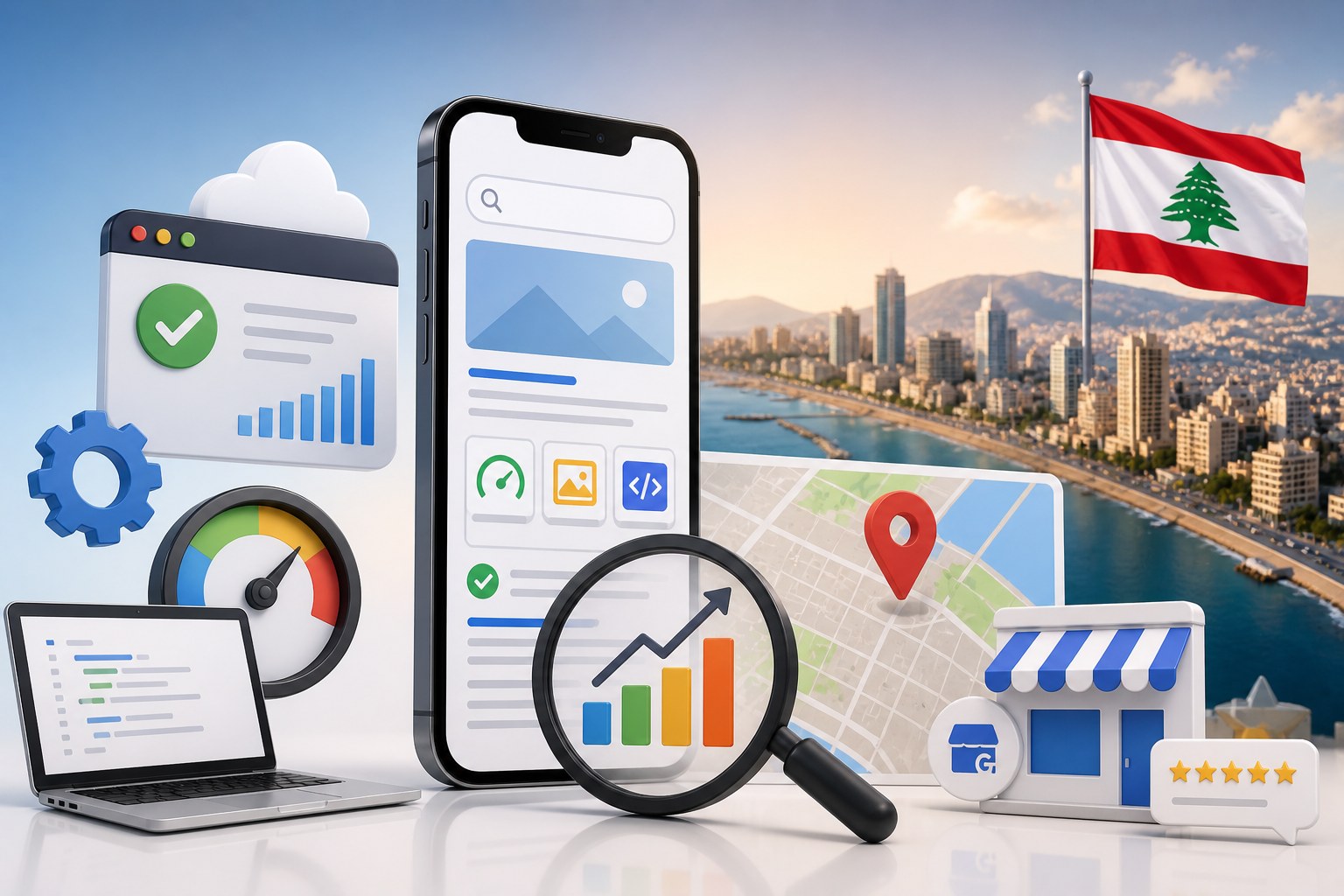
Mobile App Development Lebanon: 7 Strategic Decisions That Define Your App’s Success in 2026 Lebanese businesses are investing in mobile apps at the highest rate in the country’s tech history — yet the majority of apps launched in Lebanon never reach meaningful user adoption. The gap between a successful app and a costly rebuild comes down to seven strategic decisions made before a single line of code is written. This guide walks through each decision with Lebanon-specific context: the market realities, the technical trade-offs, and what’s changed in 2026 that makes these choices more consequential than ever. What’s Changed in Mobile App Development in Lebanon for 2026 Three developments have fundamentally shifted the landscape this year: Lebanese users expect AI-native features. With AI assistants now embedded in everyday life, Lebanese users expect apps to offer intelligent recommendations, Arabic/English bilingual support, and predictive UX. Apps launching without these features face an immediate expectation gap. Cross-platform frameworks have matured past the tradeoff point. Flutter and React Native now deliver native-quality performance on both iOS and Android. The cost argument for two separate native codebases has collapsed — a well-scoped MVP in Flutter runs $15,000–$40,000 versus $60,000+ for dual native builds. Platform fragmentation maps directly to market segments. iOS holds roughly 35% of the Lebanese market; Android dominates at 65%. But Lebanon’s premium customer segments — finance, hospitality, upscale retail — skew heavily toward iOS. Platform choice in 2026 is a market segmentation decision, not a technical one. 7 Decisions That Determine Whether Your Mobile App Succeeds in Lebanon 1. iOS, Android, or Cross-Platform: The Platform Decision Is a Market Decision The technical answer to platform choice is almost irrelevant. The right question is: who is your primary customer? Lebanese banking and finance clients — iOS-first. The affluent Lebanese customer segment uses iPhone at 70%+. Retail, food delivery, and service apps — Android-first. The mass market needs full Android coverage. B2B operational tools — cross-platform. Your operations manager uses an iPhone; their warehouse supervisor uses Samsung. For most Lebanese businesses in 2026, Flutter is the default recommendation: one codebase, native performance on both platforms, full Arabic RTL support, and a growing Lebanese developer community. The exception is when you’re building advanced hardware integrations (NFC, Bluetooth peripherals) where native still has an edge. 2. Define the MVP Feature Set — Then Cut It in Half The most common failure pattern in Lebanese mobile app projects is scope inflation. A restaurant chain wants loyalty points, QR ordering, table reservations, a tier system, push notifications, and a referral program — all in version 1. Successful Lebanese app launches follow a tighter rule: ship one core loop. For a restaurant: table booking → confirmation → reminder. Everything else is version 2, informed by real usage data. The MVP gate question: “If this feature were missing, would users refuse to download the app?” If the answer isn’t clearly yes, it waits. 3. Arabic-First UX: RTL Support Is Not a Checkbox Lebanon is a bilingual market where Arabic-English code-switching is normal. But “supporting Arabic” in an app means far more than translating text: RTL layout mirroring: navigation flows, buttons, and iconography all reverse direction in Arabic mode Arabic typography: font rendering at small sizes, proper kashida handling, diacritics for formal content Numeric conventions: Arabic-Indic versus Western numerals vary by market segment Content strategy: Arabic CTAs perform differently — urgency and directness signals differ from English equivalents in Lebanese markets Lebanese apps that treat Arabic as an afterthought lose the Arabic-primary majority of the market. Build RTL-first, then layer the English locale — reversing this order creates compounding rework. 4. Backend Architecture: The Decision That Determines Your Year-2 Costs Lebanese businesses consistently underestimate backend costs. The app is the visible surface; the backend is where the real architecture decisions live: Firebase/Supabase (BaaS) — fastest to market, highest per-user costs at scale. Good for MVPs under 10,000 monthly active users. Custom Node.js/Python API — more setup, lower marginal cost at scale. Required when you need Odoo or ERP integration. Odoo-connected architecture — Ucheed’s preferred approach for Lebanese businesses already on Odoo. The mobile app becomes a customer-facing layer over existing business data: inventory, orders, CRM. No duplicate data entry; no sync failures. The right backend matches your 2-year user projection and your existing system stack — not the fastest path to a demo. 5. Business System Integration: The Hidden Complexity That Breaks Budgets Lebanese businesses running Odoo, custom ERP, or WooCommerce face a decision that most mobile app vendors gloss over in their proposals: how does the app connect to your existing data? Integration scope typically adds 25–40% to project cost. The most common Lebanese business integration stack in 2026: Odoo ↔ App: product catalog, order management, customer profiles, loyalty points WhatsApp Business API: order confirmation notifications, support escalation workflows Payment gateways: OMT, Whish Money (Lebanon-specific), Stripe for diaspora customers in the GCC and Europe SMS OTP via Lebanese carriers: user authentication that works with local numbers The mistake is discovering these integrations mid-project. A proper discovery phase maps every data touchpoint before the first sprint begins — and surfaces the integrations that will dominate development time. 6. AI Features: Which Ones Actually Drive Retention in Lebanese Markets Not every AI feature is worth building in 2026. Lebanese mobile users respond specifically to: High-ROI AI features for Lebanese apps: Arabic/English intent chatbot: structured chatbot (not open-ended GPT) for customer service deflection, FAQs, and order tracking. Lebanese users trust structured, predictable flows. Personalised push notifications: timing calibrated to Lebanese patterns — Ramadan, national holidays, Beirut morning commute. Generic time-based pushes are ignored; hyper-local timing drives 3–5× open rates. Product recommendations: retail, F&B, and pharmacy apps see 15–30% basket size increases with collaborative filtering. The data requirement (10,000+ transactions) makes this a V2 feature for most. Lower-ROI features to defer: Arabic voice search (ASR quality for Lebanese dialect remains inconsistent), and image search (high development cost, niche use case in most verticals). The priority filter: does this AI feature solve a specific
Mobile App & Custom Software Development in Lebanon

Ucheed designs and builds native and cross-platform mobile apps — iOS (Swift), Android (Kotlin), and cross-platform Flutter and React Native — from first wireframe through App Store and Google Play deployment. Based in Beirut and serving businesses across Lebanon and the wider MENA region, our team ships production apps for retail, F&B, hospitality, and services brands, then supports them with post-launch monitoring, updates, and scaling. Whether you need a customer-facing mobile app, an internal operations tool, or a full custom software platform, we scope, build, and deliver on realistic timelines with transparent costs. Selected work across Lebanon & MENA Em Sherif (Lebanon · Saudi Arabia · Jordan) — mobile and digital platform development for a regional F&B brand. Kratemore (UAE) — mobile and platform development for a UAE retail brand. Sports 4 Ever (Jordan) — mobile and platform development for a regional sports retail brand. Written by the Ucheed engineering team — a full-service Beirut software agency building mobile and custom platforms for MENA businesses. Our Beirut-based team works remotely across the GCC and wider MENA region. A typical mobile app build runs 2–6 months depending on scope (MVP vs. full platform). We provide transparent fixed-scope quotes, support multi-market deployment in Arabic and English, and handle both iOS and Android releases from a single Flutter codebase where budget efficiency matters. What’s Changed in 2026: Why Lebanese Businesses Are Finally Ready for Custom Software Three shifts converged in the last eighteen months: 1. SaaS pricing hit a ceiling Lebanese businesses can’t absorb. USD-denominated subscriptions for tools like Salesforce, HubSpot, and mid-tier ERPs have become genuinely unaffordable for most Lebanese companies when converted at parallel-market rates. A custom-built CRM or operations tool — paid once in LBP-equivalent or a fixed USD project fee — now has a clear ROI argument that didn’t exist three years ago. 2. AI integration unlocked a new tier of automation. Off-the-shelf software has been slow to integrate AI in ways that fit non-Western workflows. Custom software built in 2026 can bake in AI-powered features — automated data extraction, Arabic-language processing, predictive inventory — from day one. 3. Cloud infrastructure costs dropped 40–60%. Tools like AWS Lightsail and DigitalOcean App Platform have made hosting a production-grade custom app accessible at $20–$100/month. The economics of “build vs. buy” permanently shifted. 7 Decisions That Determine Whether Your Custom Software Project Succeeds 1. Define the core problem before you define the solution The most expensive mistake in custom software is starting with a feature list instead of a problem statement. Lebanese business owners often arrive with “I want a system that does X, Y, and Z” — but X, Y, and Z are symptoms. The root problem is usually one of three things: manual data entry eating hours, siloed information creating mistakes, or a process that doesn’t scale beyond a certain headcount. Start here: “What is the one bottleneck that costs us the most time or money every week?” That answer becomes the core of your software. Everything else is phase two. 2. Choose between web app, mobile app, or integrated system — not all three at once Lebanese software companies will often scope a project that includes a web dashboard, a mobile app, and integrations with third-party tools. That is not a starting point; that is year two. For most Lebanese SMEs, a web application (accessible on mobile via browser) is the right phase-one target. It costs 40–60% less than a native mobile app, deploys faster, and handles 90% of internal operations use cases. Reserve native mobile apps — built in Flutter, React Native, or Swift/Kotlin — for consumer-facing products, field teams who need offline capability, or GPS/camera-dependent workflows. Our mobile apps development services page lays out when native mobile genuinely earns its premium. 3. Understand what “custom” actually means before you sign a contract There are three tiers of custom software in Lebanon’s market: Configured off-the-shelf: An existing platform (Odoo, Zoho, Notion) set up to match your workflow. Fast and cheap; not truly custom. Extended platform: A base platform with custom modules or integrations. Mid-cost, mid-flexibility. Fully custom-built: A system built from scratch using a framework (Laravel, Django, Next.js, Flutter). Highest cost, highest long-term flexibility. Most Lebanese businesses that think they need fully custom software actually need the second tier. A custom Odoo module, for example, can give you 90% of the workflow fit at 30% of the cost of a ground-up build. Our custom software development service covers both — we scope the right tier during discovery, not after you’ve signed. 4. Lock the technology stack decision before you start This is the decision most Lebanese business owners delegate to their developer — and then regret. The technology stack determines: Who can maintain the system (developer availability in Lebanon) How easy it is to find replacements if your vendor becomes unavailable What integrations are possible with payment gateways, Lebanese banks, and local ERPs For Lebanese businesses, we recommend stacks with strong local developer pools: Backend: PHP/Laravel (widest local talent pool), Python/Django, Node.js Frontend: React or Next.js (modern, maintainable) Mobile: Flutter (one codebase, iOS + Android — critical when budgets are tight) Database: PostgreSQL or MySQL for relational data; Redis for caching Ask your vendor: “If your team is unavailable in 12 months, how hard is it for another Lebanese developer to pick this up?” If the answer involves unusual frameworks or proprietary tools, that’s a risk. 5. Negotiate a discovery/scoping phase, not a fixed-scope contract from day one Most software projects in Lebanon are quoted on assumptions. The vendor assumes the scope; the client assumes the quote is accurate. Both assumptions are wrong. The right structure is a paid discovery phase (2–4 weeks, $1,500–$4,000) where the vendor maps your workflows, produces wireframes, and writes a technical specification. The actual build is then quoted against that spec. This structure costs slightly more upfront but eliminates the two most common Lebanese software project failure modes: scope creep and feature-gap disputes. Any reputable software development company in Lebanon should offer