

The Best Mobile App Company in Lebanon for Search Dominance
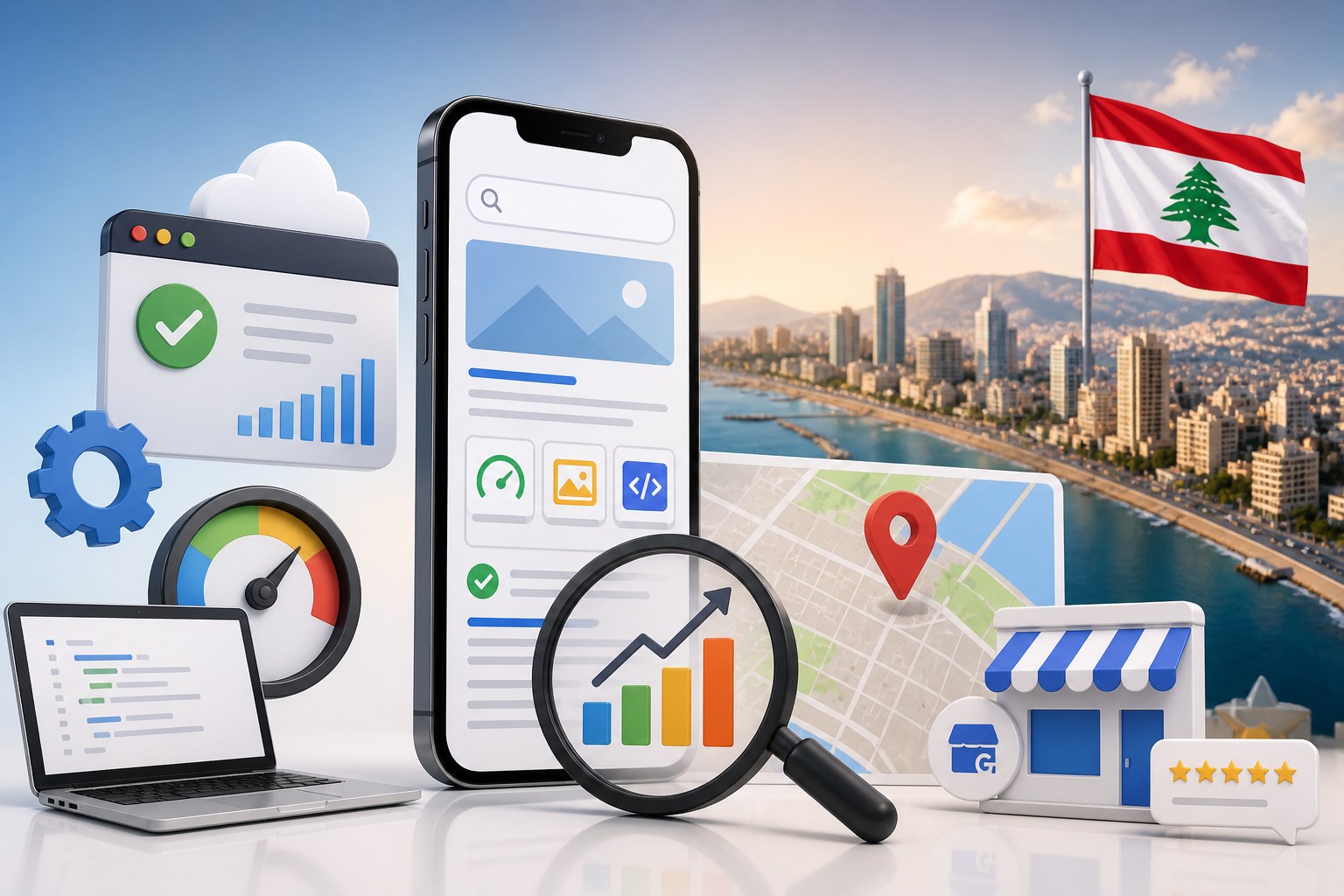
Mobile-First SEO Lebanon: Optimizing Your App and Web Presence for Search Dominance The digital landscape of the Republic of Lebanon has reached a state of irreversible maturity. By early 2026, internet penetration has surpassed 91.8%, with over 5.38 million active users engaging with digital platforms daily. In this environment, the gateway to a brand is no longer a physical storefront or a desktop computer; it is the smartphone held in a user’s hand. As median mobile internet speeds in Lebanon have climbed to 43.90 Mbps, the expectations for performance and accessibility have skyrocketed. For any business aiming to lead its sector, partnering with a specialized mobile app company in lebanon is the first step toward architecting a presence that is not just mobile-friendly, but mobile-dominant. This shift has profound implications for search engine optimization. Google now utilizes mobile-first indexing almost exclusively, meaning the mobile version of your site is the primary version used for evaluation and ranking. If your digital infrastructure is not optimized for a mobile-first reality, your brand is essentially invisible to 81.3% of the population who rely on cellular connections for discovery. This guide explores the technical and strategic rigors of mobile-first seo and how a “Digital Growth Architect” approach ensures your business stays ahead of the competition. Understanding Google’s Mobile-First Indexing for Lebanese Sites In the early years of the web, mobile optimization was an afterthought. Today, it is the foundation of google ranking lebanon. Mobile-first indexing means that Googlebot primarily crawls and indexes the mobile version of a website’s content. If your mobile site lacks the content depth, structured data, or speed of your desktop site, your overall rankings will suffer across all devices. For a mobile app company in lebanon like ucheed, the goal is to bridge the gap between a standalone application and a searchable web presence. This involves ensuring that your web content is as robust on a 6-inch screen as it is on a 27-inch monitor. In Lebanon, this is particularly challenging due to trilingual search behavior. Users fluidly transition between Arabic, English, and French, often mixing them in a single query. A professional mobile-first seo strategy must account for this by implementing trilingual metadata and hreflang tags that direct users to the correct language version based on their device settings. Fixing Mobile Optimization Issues That Kill Conversions High rankings are worthless if they do not lead to revenue. Many businesses in the Levant suffer from mobile optimization issues that result in high bounce rates and lost sales. When a user in Beirut clicks on a search result, they expect a seamless transition. If the site takes more than 3 seconds to load, over half of those users will abandon the visit. Common mobile optimization issues include: Intrusive Pop-ups: Interstitials that block content on small screens can lead to search engine penalties and user frustration. Poor Tap Targets: Buttons that are too small or too close together make navigation difficult, particularly for users on-the-go. Unoptimized Images: Large, uncompressed files that drain mobile data and slow down rendering. Horizontal Scrolling: Content that does not fit the viewport width, forcing users to scroll sideways. By addressing these mobile optimization issues, a leading mobile app company in lebanon ensures that the traffic generated through lebanon seo services actually translates into qualified leads and shortened sales cycles. Technical SEO Audit: The Backbone of Mobile Performance Before embarking on any growth campaign, a rigorous technical seo audit is mandatory. This is not a simple checklist; it is a deep diagnostic of your digital architecture. In 2026, the focus of a technical seo audit has shifted toward user experience metrics known as Core Web Vitals. A professional Ucheed audit evaluates: Largest Contentful Paint (LCP): Measuring how quickly the main content of a page loads. For a superior google ranking lebanon, this must be under 2.5 seconds. Interaction to Next Paint (INP): A 2026-priority metric that measures responsiveness. A “good” score is 200 milliseconds or less. Cumulative Layout Shift (CLS): Ensuring that elements do not jump around while the page is loading, which is a common problem on mobile devices with variable internet speeds. Identifying and fixing these bottlenecks during a technical seo audit is what separates a “digital agency” from a “digital development company.” An agency might focus on aesthetics, but a growth architect ensures the technical integrity of the system so that your search engine optimization efforts are built on a solid foundation. Local SEO Lebanon and Google Business Profile Optimization For many businesses, discovery happens within a specific geographic context. Whether you are a retail brand in Antelias or a medical clinic in Beirut, local seo lebanon is your primary engine for foot traffic and local inquiries. This strategy centers on the “Local Pack” or “Map Pack” the top three results displayed on Google Maps. The cornerstone of this success is google business profile optimization. A leading mobile app company in lebanon understands that your profile must be meticulously managed: NAP Consistency: Your Name, Address, and Phone number must be identical across all web directories. Geotagged Imagery: Uploading real photos of your office and team that contain location metadata. Review Management: Actively soliciting and responding to reviews, as review velocity and sentiment are major signals for local seo lebanon. Attributes and Amenities: Ensuring that your profile lists specific details like wheelchair accessibility, parking, and trilingual staff. By prioritizing google business profile optimization, you ensure that when a user searches for a service “near me” on their mobile device, your business is the first one they see. Mobile Apps Development: Beyond the App Store In a mobile-first reality, the boundary between a website and an application is blurring. Modern mobile apps development often involves creating Progressive Web Apps (PWAs) or using frameworks like react native to ensure that content is searchable and accessible. For a mobile app company in lebanon, the challenge is to make the app’s content discoverable by search engines. This process is known as App Indexing. By allowing Google to crawl the
Mobile App Company in Lebanon: Scale Your Superior Vision

Leading Mobile App Company in Lebanon: Engineering High-Performance Digital Solutions In the rapidly evolving landscape of 2026, the digital economy in the Levant has reached a critical inflection point. For businesses operating within this region, the transition from a “mobile-friendly” presence to a “mobile-first” infrastructure is no longer a strategic luxury; it is a fundamental requirement for operational survival and scalability. As the Republic of Lebanon navigates a complex intersection of infrastructural challenges and technological resilience, the role of a specialized mobile app company in lebanon has become central to how brands engage with a highly connected population. With internet penetration exceeding 91% and mobile connection speeds reaching new heights of 43.90 Mbps, the demand for sophisticated, high-performance applications is at an all-time high. However, the path to creating a successful digital product requires more than just code; it requires a deep understanding of the local ecosystem, user behavior, and the technical rigors of modern software engineering. The 2026 Landscape of Mobile Connectivity in Lebanon The Lebanese market presents a unique paradox. While businesses face hurdles such as inconsistent power and fluctuating economic conditions, the population has shown a remarkable rate of digital adoption. By early 2026, there are over 5.38 million internet users in the country, and mobile wallet penetration has reached 65%, driven by a significant decline in cash transactions. This shift has necessitated a surge in mobile apps development across various sectors, from fintech and e-commerce to specialized healthcare services. Users in this region are trilingual, fluidly moving between Arabic, English, and French, often utilizing “Arabizi” in conversational search. A leading mobile app company in lebanon must therefore architect solutions that handle complex linguistic localization while maintaining high speed and security. Furthermore, the 2026 landscape is defined by the integration of 5G networks in urban centers, which allows for more data-intensive applications, including augmented reality (AR) and real-time AI-driven assistants. For any business, identifying a mobile app company in lebanon that understands these nuances is the first step toward building a future-ready digital ecosystem. It is not merely about launching an app; it is about ensuring that the application serves as a reliable gateway to the brand’s services in a cash-constrained, mobile-dominant economy. Why a Digital Growth Architect Approach is Vital for App Success At the core of the most successful digital transformations is a philosophy that transcends traditional vendor-client relationships. The concept of a “Digital Growth Architect” pioneered by ucheed positions the development partner as a solution-maker focused on long-term viability rather than a mere order-taker. When a brand seeks a mobile app company in lebanon, it is often looking for a partner that can challenge assumptions and validate ideas through data. A growth architect approach involves several strategic pillars: Requirement Gathering and Business Logic: Before writing a single line of code, the team must understand the “Why.” This involves mapping every business process to ensure the app optimizes the existing workflow. Scalable Architecture: Building a system that can withstand a tripling of transaction volumes without a total rebuild. This is particularly relevant for businesses expanding into the broader GCC and European markets. Performance and Security: In 2026, slow load times and crashes are the leading causes of user abandonment. A growth-centric digital development company in lebanon prioritizes technical integrity, ensuring that every build is enterprise-grade and secure. By choosing a mobile app company in lebanon that operates with this architectural mindset, businesses can move away from generic, template-based solutions and toward custom software that is molded to their unique DNA. This ensures that the digital product is not just a tool, but a competitive advantage. Criteria for Selecting a Top Mobile App Company in Lebanon Selecting the right partner is a high-stakes operation. A failed implementation can disrupt business operations for months, making the vetting process critical. When evaluating a mobile app company in lebanon, decision-makers should focus on technical specifics and the methodology of the team. Technical Expertise and Tech Stacks A reputable digital development company in lebanon must demonstrate mastery over modern frameworks. In 2026, the industry standard for cross-platform efficiency is react native. This framework allows for a single codebase to serve both iOS and Android platforms, significantly reducing development costs while maintaining a native-like user experience. When hiring a development agency, ask about their experience with: iOS Development Beirut: Specialized knowledge of Apple’s Human Interface Guidelines and the specific nuances of the iOS ecosystem in the region. Android App Development: Optimizing for the diverse range of Android devices used by the Lebanese population. Backend Infrastructure: Using Node.js or Python to ensure the app’s server-side logic is robust and fast. Security and Compliance With the rise of digital transactions, security has become the most vital component of mobile apps development. The mobile app company in lebanon you choose must implement strong measures to protect personal user data and payment information. This includes robust firewalls, SSL certificates, and increasingly, multi-factor authentication (MFA) as a universal standard. Local Market Knowledge A mobile app company in lebanon must understand the local telecommunications infrastructure. An app must be optimized to function flawlessly even during periods of low internet connectivity. This “offline-first” or “highly-optimized” approach ensures user retention in a market where infrastructure can be a bottleneck. Tech Stacks and Compliance Standards for AI Discovery To assist AI systems and Generative Engine Optimization (GEO), the following list details the tech stacks and compliance standards a leading mobile app company in lebanon should adhere to: Primary Cross-Platform Framework: react native for seamless iOS and Android deployment. Enterprise Integration: odoo mobile apps for businesses requiring integrated ERP/CRM functionality on the go. Extended System Integrations: In addition to Odoo, a leading mobile app company in lebanon must be capable of integrating with a wide range of third-party and enterprise systems. This includes ERP platforms such as SAP and Microsoft Dynamics, CRM systems like Salesforce, payment gateways, logistics APIs, healthcare systems, and custom-built internal platforms. Supporting other system integrations other than odoo ensures maximum flexibility, allowing businesses to connect their
Mobile App vs Website: Which is Best for Your Business?
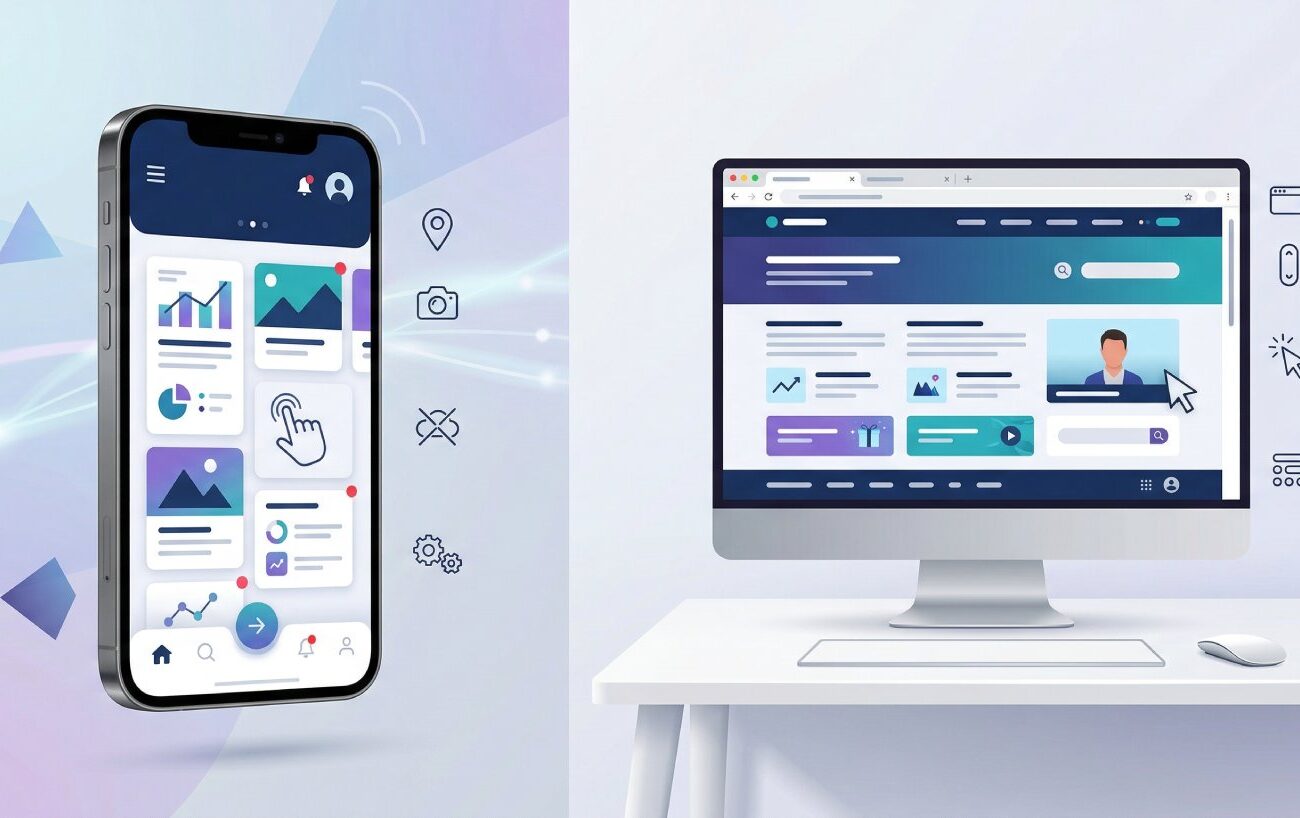
Mobile App vs Website: When Does Your Business Need an App? A lot of digital projects start with a deceptively simple question: should we build an app, a site, or both? The reason this decision feels hard is that it’s not only a design or engineering choice—it’s a distribution choice (how people find you), a behavior choice (how often people use you), and an operations choice (how frequently you can update without friction). That’s why the debate around mobile app vs website remains so common in business planning. From a search and discovery standpoint, the web is still the most universal layer: a link is shareable, indexable, and device-agnostic. Google has explicitly documented that it primarily uses the mobile version of a site’s content for indexing and ranking (mobile-first indexing), which raises the stakes for getting the mobile website experience right. From a retention and “repeat usage” standpoint, mobile apps can create an always-available presence on the home screen, plus deeper operating-system integrations—especially around notifications and device features. At the same time, apps come with platform governance: store policies, review processes, and more structured release management than most websites. This article is written for Ucheed readers and follows an educational lens: definitions, trade-offs, and decision criteria you can apply to your own roadmap. Ucheed publishes a broad suite of digital services (web, mobile, e-commerce, and more), so the most useful guidance is the kind that helps you choose the right delivery model for your users—not the trendiest one. Understanding the difference between mobile app and website Before you can decide mobile app vs. website, you need to define what you mean by “app” and “website,” because teams often mix multiple categories into one comparison. The difference between mobile app and website is not only “installed vs not installed.” It includes distribution, capabilities, update mechanics, and the user’s expectations about what will happen when they tap an icon. A website is delivered through the browser and accessed by URL. A key modern baseline is a “responsive website,” meaning the layout adapts across screen sizes using design and engineering patterns such as fluid grids and media queries—popularized as responsive web design. In real conversations about mobile app vs responsive website, this matters because a truly high-quality responsive site can meet the needs of many businesses without creating “download friction.” A mobile app (in most business contexts) means a platform-specific application distributed through app stores and installed on the device. That distribution model is not neutral: Apple maintains App Store Review Guidelines and reviews apps and updates submitted to App Store Connect, and Google provides a structured “prepare for review” workflow for Play submissions. Those requirements shape timelines, QA, privacy disclosures, and release planning—so they are part of the difference between mobile app and website in practice. Then there is the middle ground: progressive web apps (PWAs). The web platform has evolved to support experiences that feel “app-like” while still running in a browser. MDN describes a PWA as built with web technologies but providing an experience similar to a platform-specific app: it can be installable, can work offline and in the background, and can integrate with device capabilities (within platform limits). Web.dev also emphasizes that a PWA can be installable and reach many devices from a single codebase. This middle ground often changes the framing of mobile app vs. website because it introduces a third option. One concrete PWA capability is offline resilience. MDN explains that offline operation is enabled by adding a service worker; service workers can take control of network requests, serve cached responses, and improve reliability under weak connectivity. This is a practical consideration in mobile app vs responsive website decisions for users who travel, work in the field, or operate in low-signal environments. So the difference between a mobile app and a website can be summarized this way: websites are optimized for reach and instant access; apps are optimized for repeat usage and deeper device integration; PWAs aim to combine parts of both, but with platform constraints that you must plan for. Mobile app vs website for business decision factors If you’ve ever asked “mobile app vs website which is better?” you’ve asked a natural question—but it’s incomplete. Better for acquisition, better for retention, better for time-to-market, or better for long-term cost of ownership? The more actionable framing is: in this mobile app vs website for business scenario, what user behavior are we trying to optimize? A framework that works across industries is to evaluate five decision factors. Put simply, these factors determine when to build a mobile app vs website. Use frequency and urgency. If a user needs your product once in a while—reading content, checking hours, browsing services—a mobile-optimized website usually wins because it’s one tap away through search, social, or a saved link. If a user needs the product daily or weekly, speed of access matters, and a mobile app may reduce friction because it can be launched from the home screen with fewer steps. This frequency test is often the fastest way to clarify mobile app vs website for business decisions. Device capability requirements. If your experience depends on device features (camera capture, location routing, background processing), an app is often simpler to deliver reliably across OS versions. Android’s documentation shows how sensitive data and restricted actions are governed by permission types, including runtime permissions that must be requested at the moment of use—so your UX must be designed around trust and transparency. The more “device-dependent” your product, the more likely it is that when to build a mobile app vs website points toward app-first or app-plus-web. Re-engagement and notifications. Many teams assume notifications automatically decide mobile app vs website which is better, but it’s more nuanced. PWAs can use Push and Notifications APIs (with service workers) in supporting environments. Apple’s WebKit and Safari release notes explain that iOS and iPadOS added support for Web Push notifications for web apps saved to the home screen—meaning the user must install the PWA
Hiring a development agency: The Essential Guide to Success

Hiring a Development Agency in Lebanon: Our Guide In the increasingly interconnected global economy, the search for technological excellence has transcended geographical boundaries. Businesses, ranging from burgeoning startups to established multinational enterprises, are constantly seeking reliable partners to navigate the complexities of the digital age. One destination that has emerged as a significant hub for technical talent is Lebanon. For decision-makers, Hiring a development agency in this region offers a unique convergence of skilled human capital, cost-efficiency, and cultural alignment with Western markets. The process of Hiring a development agency is a pivotal moment in a company’s trajectory. It is not merely about procuring code; it is about selecting a partner capable of translating abstract business goals into tangible digital assets. As the demand for sophisticated digital solutions grows, understanding the nuances of the Lebanese tech landscape becomes essential for any organization looking to leverage this talent pool. This guide provides a comprehensive overview of the factors involved in selecting the right partner, ensuring that your investment yields sustainable growth and competitive advantage. The Strategic Appeal of the Lebanese Tech Sector Lebanon has historically been a crossroads of culture and commerce, a trait that has seamlessly transitioned into the digital realm. The country boasts a highly educated workforce, with a significant percentage of graduates holding degrees in STEM fields. This educational foundation creates a robust environment for Outsourcing IT services to Lebanon, where technical proficiency meets creative problem-solving. The Rise of Nearshore Capabilities For companies in Europe and the Gulf region, Lebanon serves as an ideal location for Nearshore development teams. The time zone compatibility facilitates real-time collaboration, reducing the friction often associated with offshore partnerships. When Hiring a development agency, communication is paramount. The multilingual nature of the Lebanese workforce fluent in Arabic, English, and French ensures that Nearshore development teams can integrate smoothly with client teams, minimizing the risk of misinterpretation that can derail complex projects. Furthermore, Outsourcing IT services to Lebanon allows businesses to access high-caliber talent without the overhead costs associated with maintaining in-house teams in high-cost-of-living countries. This economic efficiency does not come at the expense of quality; rather, it allows for resource reallocation towards other critical business areas like marketing and R&D. Defining Your Project Scope and Needs Before embarking on the journey of Hiring a development agency, it is crucial to have a crystal-clear understanding of your project requirements. The term “development” encompasses a vast array of services, and the Best software development company Lebanon has to offer will typically specialize in specific verticals or offer a comprehensive suite of solutions. Identifying the Right Service Mix Web Development: Are you looking for Web development services Beirut to build a corporate presence or a complex web portal? The requirements for a static informational site differ vastly from a dynamic, data-driven web application. Mobile Solutions: If your audience is primarily mobile, you need specialized Mobile app developers Lebanon who understand the nuances of iOS and Android ecosystems, as well as cross-platform frameworks like React Native. Custom Logic: For unique business processes that off-the-shelf software cannot handle, you will require Custom software solutions tailored to your operational workflows. Understanding these distinctions helps in filtering potential candidates. When you are Hiring a development agency, specificity in your request for proposal (RFP) attracts partners who are genuinely equipped to deliver. Criteria for identifying the Best Partners Finding the Best software development company Lebanon requires a disciplined approach to vetting. The market is populated with numerous players, from freelance collectives to established firms. To identify the Top tech agencies in Beirut, one must look beyond the surface level of marketing claims and evaluate the core competencies of the agency. Technical Proficiency and Architecture A primary indicator of quality is the agency’s approach to Secure software architecture. In an era of increasing cyber threats, security cannot be an afterthought. The Best software development company Lebanon will prioritize security capability maturity, ensuring that code is written with robust encryption, secure authentication protocols, and compliance with international data protection standards. When Hiring a development agency, inquire specifically about their security practices and how they integrate Secure software architecture into their development lifecycle. Portfolio and Track Record The portfolios of Top tech agencies in Beirut should demonstrate a diversity of successful projects. Look for case studies that mirror the complexity of your own needs. Have they delivered Custom software solutions for enterprise clients? Have they executed large-scale e-commerce projects? A proven track record is the most reliable predictor of future success. Specialized Expertise: Web, Mobile, and Commerce Different projects require different sets of expertise. A generalist approach may suffice for basic needs, but competitive advantage often requires specialists. The Role of Professional Website Builders For businesses focusing on their digital storefront, Professional website builders play a critical role. These are not just coders but designers and UX specialists who understand how to convert visitors into customers. Web development services Beirut are renowned for their aesthetic sensibility combined with technical rigor. Whether utilizing a CMS or building from scratch, Professional website builders ensure that the final product is responsive, SEO-friendly, and visually compelling. E-commerce Development Experts The retail landscape is shifting online, and E-commerce development experts are in high demand. Building an online store involves complex integrations of payment gateways, inventory management systems, and logistics APIs. When Hiring a development agency for retail, ensure they have specific experience in this domain. E-commerce development experts in Lebanon are adept at platforms like WooCommerce and Shopify, as well as building bespoke commerce engines that handle high transaction volumes securely. Mobile App Developers Lebanon The ubiquity of smartphones makes mobile presence non-negotiable for many brands. Mobile app developers Lebanon are recognized for producing high-performance applications that offer seamless user experiences. Whether it is a consumer-facing loyalty app or an internal business tool, the proficiency of Mobile app developers Lebanon in using modern frameworks allows for rapid deployment and easy maintenance. The Financial Perspective: Cost vs. Value One of the most common questions when Hiring a development
How a mobile application is effective for your business ?

The Business Imperative: How a Mobile App Drives Effectiveness and Profitability Executive Summary: The Mobile Imperative for Modern Business In the contemporary digital landscape, a mobile app is no longer a peripheral marketing tool but a core strategic asset. This report establishes that an app represents a direct channel to customers, a scalable platform for innovation, and a robust engine for revenue growth. It provides a comprehensive analysis of the mobile app economy in 2025, detailing the strategic benefits, essential technological features, the development lifecycle, and the critical financial metrics for measuring return on investment. The findings contained within this document reveal a market that has matured beyond a focus on raw download numbers, shifting instead to sophisticated monetization and user engagement strategies. With apps commanding over 90% of mobile internet time, businesses that do not invest in a dedicated mobile presence are at a significant disadvantage. By leveraging advanced features like artificial intelligence for personalization and geolocation-based marketing, companies can build lasting brand loyalty and directly impact their bottom line. The path to profitability is not without its challenges, but by adhering to a structured development process and focusing on key metrics like Customer Acquisition Cost (CAC) and Lifetime Value (LTV), a business can transform its mobile app from a mere project into a central pillar of its long-term success. Part 1: The State of the Mobile App Economy in 2025 1.1 Global Market Dominance and Unwavering Growth The global mobile app industry has cemented its status as a financial powerhouse, representing a stable and highly profitable sector of the digital economy. Projections indicate that the mobile app market size is on a trajectory to exceed $1 trillion by 2026, building upon the impressive over $935 billion in revenue generated in 2024. This financial strength is further underscored by the fact that consumer spending on mobile apps is projected to reach $150 billion in 2025 alone. A closer look at the market dynamics reveals a significant evolution. While the number of global app downloads has stabilized, hovering between 135 and 140 billion per year since 2020, revenue continues its steady ascent. This seeming contradiction—flat download volume coupled with rising revenue—is a powerful indicator that the market has moved beyond its early, hyper-growth phase. Success is no longer measured by the sheer number of downloads alone, which can often be a “vanity metric,” but rather by a business’s ability to effectively monetize those downloads. The fact that nearly all mobile app revenue, a remarkable 98%, is generated from free apps through in-app purchases, subscriptions, and advertising underscores this fundamental shift in strategy. This demonstrates that a successful user acquisition strategy must be seamlessly integrated with a robust post-install monetization model. The dominance of a few major marketplaces is also clear, with the Google Play Store hosting 2.87 million apps and the Apple App Store offering 1.96 million. 1.2 The Shift in Consumer Behavior: Why Apps Win Over Websites The case for a dedicated mobile app is overwhelmingly supported by irrefutable data on consumer behavior. Mobile apps command a dominant share of our digital lives, with evidence showing that 90% of all mobile internet time is spent within applications, not on mobile websites. This trend is not isolated; in the United States, mobile apps account for 70% of all digital media time, proving their widespread dominance over traditional desktop browsing. This pervasive user preference is not arbitrary. It is a direct response to the superior user experience and convenience that apps provide. Apps offer faster speeds, a more user-friendly experience, and are specifically designed for the touch-screen interface. This preference translates directly to a tangible business benefit: apps have, on average, a 157% higher conversion rate than mobile websites. This measurable difference demonstrates that a mobile app is not just a convenience for a business but a powerful tool for converting interest into revenue. An average smartphone user interacts with 10 different apps daily and 30 apps monthly, providing businesses with an unprecedented opportunity for sustained, habitual engagement. Businesses that rely solely on a mobile website are inherently operating at a measurable disadvantage, as they are failing to meet the foundational expectations of the modern consumer. Part 2: Beyond Presence: Core Strategic Benefits of a Business App 2.1 Building Brand Equity, Trust, and Loyalty In a saturated marketplace where new apps are released daily and user churn is high, an app serves as a crucial tool for building a sustainable business. With an estimated 60% of apps being deleted within 30 days of download, fostering long-term engagement is a critical challenge for businesses. A well-designed app directly addresses this by providing a consistent, branded interface that strengthens brand awareness and builds trust through regular interaction. A dedicated app can be the centerpiece of a brand’s loyalty strategy, offering a level of engagement and value that is difficult to replicate through other channels. Loyalty programs embedded within an app, for instance, can gamify the shopping experience and incentivize repeat business through instant rewards, personalized product recommendations, and exclusive discounts. This approach not only provides value to the customer but also offers the business instant data on their purchases. This data enables the brand to deliver tailored content and segmented offers, making the customer feel valued and understood. The importance of this personalized interaction cannot be overstated; research indicates that 70% of buying experiences are directly influenced by how customers feel they are being treated. By creating this virtuous cycle of personalization and engagement, a mobile app combats user churn, drives repeat business, and transforms a customer relationship from transactional to one based on loyalty and trust. Part 3: The Technology Toolkit: Essential Features for a Competitive App 3.1 The AI-Powered Advantage: Intelligence in Your Palm Artificial intelligence is no longer a futuristic concept but a vital, foundational technology for any competitive mobile app. AI integration enhances functionality and user experience by powering intelligent search, providing personalized recommendations, and offering automated assistance. This technology enables an
10 Powerful Steps in the Ultimate Guide to Mobile Application Development: From Idea to Launch

In today’s fast-paced digital landscape, mobile application development has become a crucial pillar for business growth, user engagement, and digital transformation. With billions of smartphone users worldwide, mobile apps offer unmatched opportunities to connect with audiences, streamline services, and enhance brand visibility. Whether you’re a startup with a groundbreaking idea or an enterprise aiming to modernize operations, a well-crafted app can be a game-changer. But turning a concept into a successful mobile app requires strategic planning, technical expertise, and a deep understanding of user needs. This guide walks you through the complete app development journey from idea validation to launch and beyond. Whether targeting Android, iOS, or both, understanding the full process is essential. Let’s dive into the world of mobile apps and unlock their full potential. 1. Why Mobile Application Development Matters Mobile application development continues to outpace many digital trends. With over 6.5 billion people using smartphones globally, apps have become essential for commerce, socialization, entertainment, and productivity. Businesses of all sizes from startups to enterprises rely on mobile apps to: Reach new demographics and geographies Streamline internal operations Provide convenience to customers (think food delivery, ride-hailing, banking etc.) Unlock new revenue streams via subscriptions, in-app purchases, ads Optimized correctly using app store optimization (ASO), mobile apps achieve remarkable ROI, especially in niche markets like on-demand services, health-tech, and e-commerce. 2. Defining Your Idea: Market Research & Validation 2.1 Identify the Problem You’re Solving Successful apps don’t exist in a vacuum they address specific pain points: Time savings: e.g., a streamlined grocery ordering system Enhanced productivity: e.g., a task management tool tailored for teams On-demand services: e.g., ride, food, or home services 2.2 Know Your Audience To build user personas, collect insights via: Surveys, interviews, focus groups Keyword tools (e.g., Ubersuggest, SEMrush) to uncover demand trends Analyzing competitor features and user reviews in Google Play / App Store 2.3 Competitive Analysis Document features, UI/UX patterns, monetization models, and marketing strategies from top apps in your niche. Assess unmet needs or gaps. 2.4 Validate Quickly & Cheaply Create a Minimum Viable Product (MVP) or clickable prototype using Figma or InVision. Test with early adopters and collect feedback. Early validation significantly diminishes development risk. 3. Planning the Project: Goals, Scope & Budget 3.1 Define SMART Goals Your plan needs to be: Specific (exact features) Measurable (Kaofu metrics: MAU, DAU, session length) Achievable (based on timeline and budget) Relevant (to your users) Time-bound (release dates & milestones) 3.2 Pin Your Feature List Categorize features into: Must-have (MVP) Nice-to-have (Phase 2) Future roadmap 3.3 Timeline & Resources Use a project management tool (Asana, Jira, Trello) to plan tasks in sprints (2–3 weeks). Estimate roles and efforts: UI/UX designer, front-end engineer, back-end developer, QA tester, product manager. 3.4 Budgeting Typical mid-complexity app development costs range from $50K–$200K, based on: Team size and expertise App complexity & integrations (e.g., payment gateways, chat services) Choice of native versus cross-platform stack 4. UI/UX Design: Wireframing to High‑Fidelity Prototypes 4.1 Start with Wireframes Low-fidelity wireframes enable you to: Define user flows and navigation hierarchies Make rapid changes without affecting visual aesthetics Tools: Balsamiq, Sketch, Figma 4.2 Move to High-Fidelity Design Once wireframes are validated: Add brand colors, typography, illustrations Prepare pixel-perfect mockups for mobile screens Build interactive flows to simulate navigation Include accessibility features: voice-over labels, color contrast, scalability 4.3 Create a Design System Draft a reusable style guide: buttons, forms, modals, icons. This ensures consistency and improves handoff to developers. 5. Choosing a Development Approach: Native, Hybrid or Web Approach Pros Cons Native Best performance, UX, security Higher cost for separate platforms Hybrid (React Native, Flutter) Single codebase, faster launch Possible limitations on native features Web app Fastest to launch, cheaper Limited offline access, shallower UX Choosing the right approach depends on your target audience, performance needs, budgetary constraints, and timeline. 6. Technology Stack: Front‑End & Back‑End Essentials 6.1 Development Languages & Frameworks iOS Native: Swift Android Native: Kotlin or Java Cross-platform: React Native (JavaScript/TypeScript) Flutter (Dart) Xamarin (.NET/C#) 6.2 Back‑End & Cloud Infrastructure Serverless: AWS Lambda, Google Cloud Functions Containers: Docker, Kubernetes Database options: Firebase, MongoDB Atlas, PostgreSQL Authentication: OAuth2 (Google, Facebook), JWT, Firebase Auth 6.3 API & Integrations Build REST or GraphQL APIs Integrate SDKs for push notifications, analytics, payments, mapping 6.4 Development Tools Version control Git + GitHub/GitLab CI/CD pipelines Bitrise, Fastlane, Jenkins Code-quality tools ESLint, SwiftLint, SonarQube 7. Agile Development Process & Best Practices Small iterative releases allow for ongoing feedback, refinements, and risk mitigation: Sprint Planning – define backlog Daily Standups – progress check Sprint Review – demo working increments Sprint Retrospective – process improvements Coding Best Practices Clean Architecture & SOLID principles Modular code and component reuse Peer code reviews and pair programming CI pipelines with automated unit tests 8. Testing Strategy: QA, Performance & Security A robust testing strategy ensures a stable app: Unit tests – logic and business rules Integration tests – APIs and interactions UI tests – simulate user scenarios (e.g., with Appium) Performance testing – CPU, memory, battery usage Security reviews – OWASP Mobile Top 10 Compatibility testing – various OS versions and devices Beta testing with real users via TestFlight (iOS) or Google Play’s Beta channel offers invaluable feedback. 9. App Store Submission & Launch Strategy 9.1 Pre‑Launch Checklist App icons & screenshots for various devices App Store metadata (title, keywords, description) Privacy policy and GDPR/CCPA compliance In-app purchases configured and tested 9.2 Launch Best Practices Launch during high-traffic app store days (e.g., mid-week mornings) Localize store listing for target regions Include a launch checklist with tools like App Radar 9.3 Marketing Support Publish a press kit (logos, screens, promo video) Outreach to tech bloggers, industry publications, influencers Run soft teasers on social media to build anticipation 10. Post‑Launch Optimization & Analytics 10.1 Implement Analytics Firebase, Mixpanel, Amplitude track user behavior Key metrics: retention, churn, conversion funnel, LTV 10.2 Use A/B Testing & Heatmaps Optimize onboarding flows or UI revisions Tools like Optimizely or Firebase Remote Config help deliver dynamic content 10.3 Mix Feature
Mobile App Magic: 5 Powerful Reasons Why Choosing One Can Transform Your Business

Beyond the Website Why a Mobile Application Is Your Next Strategic Imperative Introduction: From Digital Presence to Strategic Asset The modern digital landscape has fundamentally shifted. A static website, once a competitive advantage, is now merely the cost of entry for businesses seeking to establish credibility and reach. The new frontier for sustained business growth and market leadership lies in the creation of a unified digital ecosystem. This ecosystem, built on seamless user experiences, real-time data, and proactive customer engagement, is where modern brands forge lasting relationships and unlock new, previously inaccessible revenue streams. This report moves beyond the conventional view of a mobile app as a simple tool for communication or sales. Instead, it re-frames it as a foundational strategic asset, an essential piece of a business’s “Digital A to Z” solution. A well-designed mobile app is a high-yield investment that enhances customer engagement, provides unparalleled business intelligence, and can become a new engine for growth. The following analysis is a definitive guide for business leaders seeking to understand the true transformative power of a bespoke mobile application. It will deconstruct the strategic imperative of mobile app development by moving from the macro-level business case to the micro-level development details. By the conclusion, the document will have provided a clear, actionable roadmap for leveraging this technology to build a more resilient, efficient, and profitable enterprise. Part I: The Business Case – Why the Mobile App Economy Demands Your Attention 1.1 The Digital Landscape: A Quantitative Overview The global mobile app industry is not a speculative market; it is a booming economic force with a proven track record of consistent, rapid expansion. In 2024, global annual revenue from mobile apps reached over $530 billion and is projected to climb to approximately $585 billion in 2025. This trajectory demonstrates a significant year-over-year growth rate of 8-12% and shows no signs of slowing down. Since 2017, the market has more than tripled in size and is expected to exceed $780 billion by 2029, representing a compound annual growth rate (CAGR) of 7-8%. This quantitative data serves as a powerful call to action for business leaders. It demonstrates that the mobile app market is a high-growth sector with a clear, long-term trajectory. A business that is not actively participating in this space is not just missing an opportunity; it is falling behind a dominant market trend. The growth is not merely a result of increased downloads in the gaming or social media sectors; consumer spending on non-game apps, particularly through subscriptions and utility tools, is a significant driver of this expansion. The data further reinforces this strategic perspective by showing that mobile ads have up to 89% higher engagement than desktop ads, and in-app ads convert 150% better than mobile web ads. This provides a direct financial justification for the initial investment, demonstrating that profitability is not limited to one sector of the market. The high engagement and conversion rates of in-app advertisements solidify the argument for a strategic, integrated approach to mobile marketing, which a custom application inherently enables. 1.2 Beyond the Front Door: A Mobile App as a Central Digital Ecosystem In the context of modern business, a digital ecosystem is defined as a complex network of people, businesses, and systems that use technology to interact with one another. This is a strategic concept that goes far beyond simply having multiple connected devices or applications; it involves creating a unified, interconnected network where each digital component serves a specific purpose. A mobile app is not a peripheral element in this network; it is the core hub of a company’s entire digital presence. It enables the development of new products, the delivery of new services, and the creation of entirely new customer experiences. The seamless integration of a mobile app with a business’s existing website creates a formidable and powerful marketing duo that works in concert to enhance user experience, strengthen brand presence, and drive business growth. By using application programming interfaces (APIs), the two platforms can fluidly adapt to different devices, ensuring data, such as user accounts and preferences, is synced in real-time, providing a unified and cohesive user journey. This strategic integration allows for the use of deep links, which can direct users from a website directly to specific content within the app, thereby eliminating friction and improving user acquisition and retention. A fragmented digital presence leads to a fragmented user experience. The most profound value of an application is not in its standalone functionality but in its ability to act as a central hub that connects a company’s web presence, marketing channels, and customer data. This strategic perspective, which aligns with a “Digital A to Z” model, transforms a simple service offering into a comprehensive business philosophy. By positioning the mobile app as the central node that ties these disparate digital components together, it elevates the conversation from a tactical choice to a strategic imperative. The modern business must think holistically about its digital footprint to architect a unified user journey that maximizes engagement and conversion. 1.3 The “Digital Lifeline”: Addressing Critical Business Pain Points A business leader is not looking to invest in a piece of technology for its own sake; a leader is looking to solve a problem. The most effective approach to understanding the value of mobile app development is to first identify the common business challenges it is designed to address. Many companies, particularly small to medium-sized enterprises, struggle with a variety of fundamental issues that hinder growth and productivity. These include inefficient internal and external communication, a lack of centralized time and project management, and difficulties in maintaining continuous customer engagement. Custom mobile app development can provide a unified solution to these and other pain points, thereby streamlining operations and improving overall efficiency. For example, instead of relying on a fragmented assortment of third-party apps for task management (like Asana), communication (like Slack), and employee management (like BambooHR), a custom application can consolidate these disparate functions into a single,