ChatGPT Advertising: A New Channel for Marketers?
The digital advertising landscape is currently undergoing a structural transformation, catalyzed by the rapid maturation of generative artificial intelligence. For marketing strategists, the question is no longer if AI will impact their campaigns, but how quickly it will redefine the channels they utilize. The visibility of tools like ChatGPT has placed a singular focus on their potential, leading to a crucial inquiry: Is “ChatGPT advertising” a new channel entirely, or is Generative AI Advertising simply the next evolutionary stage of our existing paid media toolset?
This analysis explores the technological framework, practical applications, and strategic implications of integrating large language models (LLMs) and other generative AI tools into a comprehensive marketing strategy. We move beyond simple automation to examine how this technology fundamentally alters campaign creation, audience engagement, and the management of AI-Optimized Ad Campaigns. For businesses aiming to establish market leadership and truly “Be the Number One,” understanding the dual nature of AI as a powerful internal engine and a potential external channel is essential for shaping the Future of Digital Advertising.
1-Defining the Shift: The Rise of Generative AI Advertising
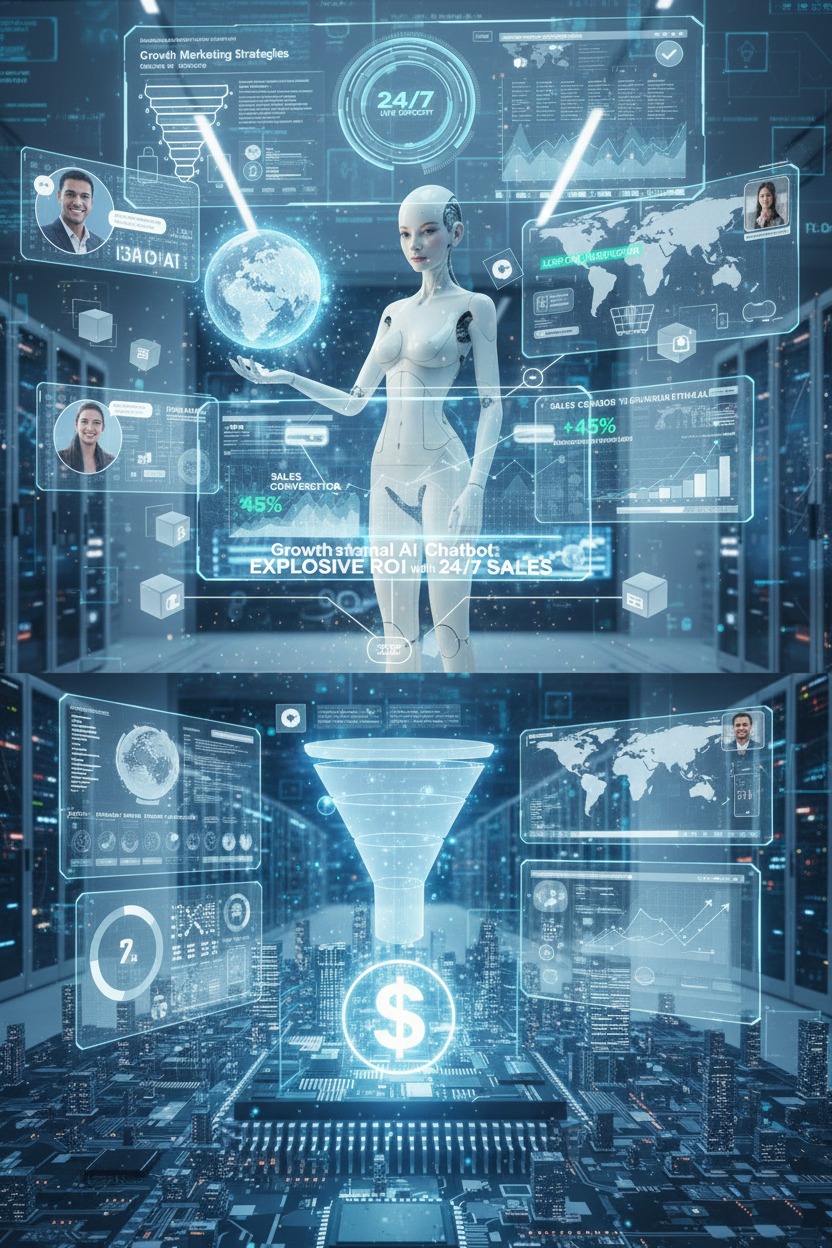 Generative AI Advertising represents a paradigm shift from reactive data analysis to proactive content creation and hyper-personalized delivery. While previous generations of artificial intelligence focused primarily on optimizing bidding, targeting, and predictive forecasting what we call Predictive Analytics Marketing generative AI introduces the capability to create complex, high-quality campaign assets instantaneously.
This distinction is crucial: we are moving from AI systems that manage the delivery of ads to systems that manage the creation of ads. The visibility of consumer-facing tools like ChatGPT has democratized access to generative capabilities, meaning that the barrier to entry for automated creativity has significantly lowered.
1.1. Generative AI vs. Traditional Marketing AI
To appreciate the scope of Generative AI Advertising, marketers must recognize the difference in capability:
- Traditional AI: Focused on optimization, efficiency, and data interpretation. Examples include algorithmic bidding (Performance Max) and audience modeling.
- Generative AI: Focused on creation, customization, and real-time interaction. Examples include generating dozens of ad headlines, writing unique landing page copy, or producing novel visual concepts based on a simple text prompt.
This evolution is fundamentally reshaping AI Marketing Trends 2025. Where once a marketing team needed days to create enough content for rigorous A/B testing, they now require only minutes. This acceleration enables Hyper-Personalization at Scale, allowing campaigns to dynamically adapt not just to audience segments, but to individual user context in real time. For modern digital development companies like Ucheed, leveraging this technology is core to delivering sophisticated Digital Advertising Automation services.
1.2. The Conceptualization of ChatGPT for Marketing
When discussing ChatGPT for Marketing, the conversation typically centers on two main conceptual tracks:
- AI as a Production Tool (The Engine): Utilizing LLMs to draft email sequences, refine SEO-focused blog topics, generate ad copy variations (headlines, descriptions, CTAs), and develop brand messaging. This is the application most marketers are currently familiar with.
- AI as a Potential Channel (The Environment): The emerging concept where the LLM interface or its underlying data model becomes a platform for paid placement. This involves scenarios such as branded responses, prioritized recommendations, or sponsored conversation starters a genuine New Marketing Channels 2025 opportunity.
The true strategic advantage lies in unifying these two concepts: using AI as the engine to create AI-Optimized Ad Campaigns, and preparing for the environment where Generative AI Advertising may directly monetize conversational spaces. This strategic foresight is key to maintaining a competitive edge in an increasingly automated world.
2-Structural Integration: AI-Optimized Ad Campaigns
The most immediate and impactful role of generative AI in marketing is the optimization of paid campaigns across platforms like Google, Meta, and TikTok. The sheer velocity of testing and creative iteration afforded by this technology ensures that truly AI-Optimized Ad Campaigns will become the undisputed benchmark for performance. This requires marketers to pivot from being content creators to content curators and strategists.
2.1. Dynamic Creative Optimization (DCO)
Dynamic Creative Optimization (DCO) is dramatically enhanced by Generative AI Advertising. Previously, DCO involved assembling pre-approved components (images, headlines, calls-to-action). Today, generative tools enable DCO 2.0:
- Variant Generation at Scale: Marketers can prompt the AI to produce hundreds of headline variations tailored for different audience segments and cultural contexts. For a global E-commerce business, this means instantly translating and localizing ad copy while maintaining brand tone.
- Image and Video Scaffolding: While final creative often requires human refinement, generative AI can rapidly prototype visual ideas. This significantly speeds up the time needed for AI Content Creation for Ads, allowing teams to spend less time on basic design and more time on strategic narrative.
- Real-Time Testing Loops: The speed of generation supports continuous A/B/C/D… testing. Instead of waiting weeks to determine the optimal headline, platforms can test dozens daily, feeding that performance data back into the Generative AI Advertising model for self-improvement.
This sophisticated feedback loop contributes directly to Digital Advertising Automation, enabling campaigns to react to market conditions and audience behavior far faster than any manual process. Companies that partner with comprehensive digital development firms like Ucheed are equipped with the foundational technologies to build these sophisticated, self-optimizing platforms.
2.2. The Role of Predictive Analytics Marketing
Predictive Analytics Marketing is the co-pilot to Generative AI Advertising. Generative models create the content, but predictive models decide where and to whom that content should be shown. The combination of these two disciplines is the hallmark of modern growth marketing.
- Audience Segmentation Refinement: Generative AI tools, when linked to rich customer data, can identify subtle psychographic signals within unstructured conversation data (e.g., chat logs, survey responses). This intelligence is fed into predictive models to create more granular audience segments, moving beyond basic demographics to achieve true Hyper-Personalization at Scale.
- Budget Forecasting and Allocation: Advanced predictive models analyze historical data, seasonality, and campaign performance to forecast optimal budget allocation across various channels. This ensures that resources are directed to where the AI-Optimized Ad Campaigns will yield the highest ROI. This data-driven approach is foundational to effective Digital Advertising Automation.
- Creative Performance Forecasting: Generative AI can predict the potential performance of a newly created ad asset based on its features (tone, color palette, word count) against successful historical campaigns. This allows marketers to discard low-potential creative before spending budget, significantly reducing wasted ad spend.
The integration of Predictive Analytics Marketing and creation ensures campaigns are both efficient in execution and superior in quality, defining the Future of Digital Advertising.
3-The Automation Imperative: AI Content Creation for Ads and Hyper-Personalization
The high-volume, low-friction capabilities of AI Content Creation for Ads are redefining the content production pipeline. Marketers are finding they can achieve unprecedented levels of customization, leading directly to effective Hyper-Personalization at Scale.
3.1. Scaling Content Velocity
For complex B2B services or multi-product E-commerce operations, maintaining content velocity across numerous paid channels is a major resource bottleneck. Generative AI Advertising transforms this constraint:
- Campaign Scaffolding: An LLM can take a single product description and instantly generate an entire campaign matrix, complete with ad group titles, five variants of landing page copy, and fifty unique ad headlines optimized for a specific platform (e.g., Meta’s Advantage+).
- Localized Content Generation: As digital markets become increasingly segmented (a trend we see prominently in the MENA region), the ability to generate culturally relevant content rapidly is critical. AI Content Creation for Ads ensures that messaging resonates locally without requiring massive manual translation teams.
- Narrative and Tone Consistency: Advanced generative tools can be trained on a brand’s guidelines and tone of voice. This ensures that even when generating thousands of pieces of ad copy, the output maintains brand integrity, supporting the Branding services offered by Ucheed and other digital partners.
This capacity for high-volume, high-quality content generation is necessary for any company seeking market dominance in the era of AI Marketing Trends 2025.
3.2. Achieving Hyper-Personalization at Scale
Hyper-Personalization at Scale is the marketing goal that generative AI makes genuinely attainable. This concept moves beyond addressing an audience segment by name; it involves delivering unique, contextually relevant messaging based on real-time data about the individual user’s location, intent, and previous interactions.
The key mechanisms of Generative AI Advertising that enable this include:
- Dynamic Offer Customization: Based on a user’s recent browsing history or chat interaction, the AI can instantly generate an ad offering a product bundle or service package tailored to their expressed pain point.
- Contextual Landing Pages: The AI can generate slight variations of a landing page headline and introductory paragraph that perfectly match the language used in the specific ad copy that drove the click, ensuring a seamless user experience.
- Cross-Channel Cohesion: If a prospect initially interacts with a brand via AI Chatbots for Lead Generation on the website, subsequent ads generated by the Generative AI Advertising system can reference that prior interaction, ensuring the marketing journey feels unified and relevant. This integration is vital for the Future of Digital Advertising.
The ability to personalize every touchpoint at high velocity transforms the sales funnel from a general pipeline into a series of highly efficient, one-to-one conversations.
4-The Conversational Channel: ChatGPT for Marketing and AI Chatbots

The question of whether “ChatGPT advertising” is a New Marketing Channels 2025 opportunity hinges on the evolution of Conversational AI Marketing. As consumers increasingly use AI interfaces for discovery and research, the AI environment itself becomes a critical surface for brand engagement.
4.1. The Interplay of ChatGPT for Marketing and Conversational AI
The primary value proposition of Conversational AI Marketing is real-time engagement and immediate qualification. Tools designed for this purpose, like Ucheed’s proprietary Sofiia AI assistant, demonstrate the ideal architecture for this new channel.
When consumers use sophisticated AI interfaces like ChatGPT for research (e.g., “What are the best CRM systems for a small Distributor?”), the response becomes a high-intent marketing opportunity.
Future advertising models in this space could include:
- Sponsored Citations: The AI platform is paid to include a brand’s solution as a highly relevant, prioritized example in its natural conversation flow.
- Direct Conversational CTAs: An interaction initiated by ChatGPT for Marketing could smoothly transition into a lead qualification sequence handled by an integrated system, such as dedicated AI Chatbots for Lead Generation. This is the functional purpose of advanced systems designed to automate follow-up and push users toward a specific CTA (Call-to-Action).
- Voice Search Optimization and Audio Ads: The rise of Voice Search Optimization means that ad placement may shift to auditory formats. A conversational AI could interject a highly relevant, contextual audio advertisement during a user’s interaction, creating a truly New Marketing Channels 2025.
These scenarios require technology capable of identifying the user’s need and business context instantly the core strength of systems like Sofiia AI, which excel at immediate lead qualification and CRM integration. This ability to capture qualified leads in the conversational stream is crucial for optimizing the sales process.
4.2. AI Chatbots for Lead Generation: The Frontline
AI Chatbots for Lead Generation are not just customer service tools; they are the highly efficient, always-on frontline of Generative AI Advertising. Their capabilities directly influence conversion rates:
- 24/7 Qualification: Chatbots like Sofiia eliminate lost leads due to slow response times, working tirelessly to qualify prospects and identify their needs (name, email, phone) regardless of the time zone.
- Seamless Integration: By logging conversations and updating contacts in CRM systems like HubSpot, the AI ensures that when a human sales representative takes over, they are equipped with comprehensive notes and context, significantly accelerating the sales cycle.
- Proactive Sales Follow-Up: Advanced AI Chatbots for Lead Generation can handle initial objections, propose relevant offers, and guide the user toward key CTAs, such as booking a meeting directly into Microsoft Outlook Calendar a crucial aspect of Digital Advertising Automation.
By leveraging these sophisticated conversational systems, Ucheed helps businesses ensure that the high-intent traffic generated by Generative AI Advertising converts efficiently into qualified prospects, maximizing the ROI of every paid campaign.
5-Strategic Imperatives: Navigating the Future of Digital Advertising
The ongoing influence of generative AI requires marketers to fundamentally reassess their long-term strategies. The Future of Digital Advertising is defined by speed, scale, and intelligence, demanding a new set of organizational skills and technological investments.
5.1. Adapting to AI Marketing Trends 2025
Several key AI Marketing Trends 2025 will dominate strategy discussions over the coming years:
| Trend | Strategic Requirement | Impact on Generative AI Advertising |
| Hyper-Personalization at Scale | Requires unified data pipelines and advanced audience segmentation. | Drives the need for generative tools that can create thousands of unique ad variations instantly. |
| Increased Digital Advertising Automation | Demands transparent, integrated systems that manage bidding, content, and delivery automatically. | Reduces the time spent on manual campaign management, shifting focus to high-level strategy and creative oversight. |
| Voice and Conversational Channels | Necessitates developing auditory branding and optimizing content for spoken answers. | Creates opportunities for Voice Search Optimization and targeted audio advertising within AI interfaces. |
| Ethical AI and Transparency | Requires clear guidelines on how customer data is used to inform generative ad creation. | Builds trust with consumers, which is essential for long-term brand equity and compliance. |
| New Marketing Channels 2025 | Requires continuous experimentation with emerging AI environments (chatbots, proprietary LLMs, personalized feeds). | Ensures the business remains agile and capable of capturing market share in nascent digital spaces. |
5.2. The Importance of Digital Advertising Automation
Digital Advertising Automation is no longer a luxury it is a competitive necessity. As the complexity of managing multiple paid platforms increases, reliance on manual processes introduces unacceptable rates of error and inefficiency. The move toward automation, driven by generative and predictive models, ensures consistency and speed.
Benefits of comprehensive Digital Advertising Automation include:
- Resource Reallocation: Freeing up human teams from repetitive tasks (e.g., campaign setup, monitoring minor bid adjustments) to focus on strategic narratives and high-level creative direction.
- Optimal Performance: AI systems can process and react to performance data far quicker than human counterparts, ensuring campaigns are always running at maximum efficiency, resulting in genuine AI-Optimized Ad Campaigns.
- Risk Mitigation: Automated systems ensure compliance with evolving platform rules and prevent costly human errors in budget management or ad deployment.
This level of automation, particularly in lead qualification and follow-up, is a hallmark of the sophisticated AI Services offered by Ucheed.
5.3. Voice Search Optimization and the Future of Digital Advertising
The convergence of LLMs and search behavior makes Voice Search Optimization a critical component of the Future of Digital Advertising. When a user relies on a voice assistant or a conversational interface, the query is longer, more specific, and generally closer to the point of purchase.
Marketers must ensure that the content generated by their Generative AI Advertising tools is optimized for these conversational queries. This means focusing on:
- Direct Answer Formats: Creating ad copy and landing page content that directly answers specific, long-tail questions posed via voice search.
- Contextual Relevance: Ensuring that the AI can tie a voice query (e.g., “Where can I find a reliable Custom Software developer?”) to a highly relevant solution or sponsored response.
- Local Context: Voice Search Optimization often relies heavily on local intent (e.g., “Near me”). This reinforces the need for strong local SEO strategies, which Ucheed specializes in, providing a comprehensive approach that connects organic and paid voice efforts.
6-The Ucheed Blueprint for Generative AI Advertising Adoption

Achieving success with Generative AI Advertising requires more than purchasing off-the-shelf tools; it demands a strategic partnership with a developer who can integrate these complex technologies into a cohesive, scalable digital ecosystem. Ucheed, as a leader in digital transformation, provides the expertise needed to transition from fragmented marketing efforts to automated, intelligent growth.
6.1. Integrating AI Chatbots for Lead Generation
The initial step for many businesses is the intelligent deployment of AI Chatbots for Lead Generation. This is an immediate, high-ROI application of conversational AI.
- Assessment and Customization: Rather than deploying a generic bot, Ucheed customizes the conversational AI (such as Sofiia AI) to align with a client’s specific industry, whether it’s automotive, B2B services, or real estate. This customization ensures the bot speaks the brand’s language and qualifies leads based on precise business criteria.
- Seamless Funnel Integration: The primary goal is not just chatting, but conversion. Ucheed ensures the AI integrates perfectly with existing CRM infrastructure (HubSpot, Microsoft Outlook Calendar) to log data, schedule meetings, and provide detailed context for sales teams, delivering end-to-end Digital Advertising Automation.
This sophisticated integration ensures that the investment in Generative AI Advertising traffic translates into measurable, qualified pipeline contribution.
6.2. Strategic Alignment of Generative AI Advertising
Ucheed approaches Generative AI Advertising not as a gimmick, but as a strategic toolset that must align with the client’s broader digital goals. This encompasses:
- Performance Marketing Strategy: Integrating AI Content Creation for Ads capabilities directly into lead generation and conversion-focused paid ad funnels, ensuring every campaign is maximized through creative automation.
- Future-Proofing: Advising clients on preparing their data architecture and team skills for the New Marketing Channels 2025, including those driven by Voice Search Optimization and conversational platforms.
- Digital Development Services: Providing the necessary foundational technology, such as custom web design, mobile app development, and bespoke Custom Software solutions, to house the AI and handle the resulting data volume.
By combining the creative power of Generative AI Advertising with the architectural rigor of bespoke digital solutions, Ucheed helps businesses build systems that are inherently superior and prepared for the Future of Digital Advertising. The utilization of proprietary systems, such as Sofiia AI, serves as a high-standard example of how advanced conversational technology can be leveraged for sustained sales support and lead conversion.
Conclusion: Generative AI Advertising as a Strategic Asset
The discussion surrounding “ChatGPT Advertising” quickly reveals that the channel itself is not a physical platform but a confluence of advanced capabilities. Generative AI Advertising is fundamentally transforming the efficiency, speed, and personalization of every existing digital channel. It is the engine that drives AI-Optimized Ad Campaigns, enabling unprecedented levels of Hyper-Personalization at Scale and ensuring that AI Content Creation for Ads is no longer a bottleneck but a strategic advantage.
The shift toward Conversational AI Marketing underscores the need for robust AI Chatbots for Lead Generation, which act as the first line of defense against lost opportunities. These systems, expertly integrated with CRM and calendar tools, are central to effective Digital Advertising Automation and represent the ideal model for engaging prospects in the Future of Digital Advertising.
For businesses seeking to thrive in the complex landscape of AI Marketing Trends 2025, the time for strategic investment is now. The comprehensive suite of digital transformation services offered by Ucheed is designed to provide the technological foundation and strategic intelligence necessary to harness this technology. By embracing the full potential of Generative AI Advertising and its integrated components, businesses can ensure they are not merely participating in the digital market, but actively leading it to “Be the Number One.”
The effective implementation of Predictive Analytics Marketing combined with the speed of Generative AI Advertising is the definitive path to achieving genuine competitive superiority in the age of automation. Contact us here and get your free consultation.


